

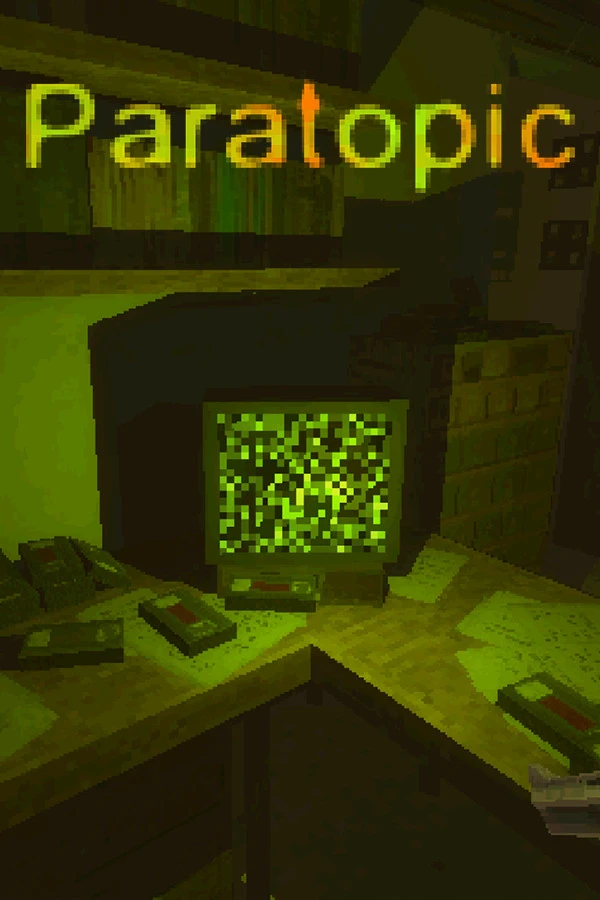
If you look at it from outside, the idea of indie horror being dominated by PS1 graphics is pretty weird. PS1 graphics is not very nice to look at. The characters have low-res JPEGs for faces. You could cut bread with the sharp angles of the polygons. Don’t get us started on the animations… But somehow, this specific type of graphics has become a darling among Indie horror and retro horror fans. There has been a flood of indie horror titles with either PS1 graphics, PS1 Tank controls of classic survival horror or both. Alisa, Paratopic, Night of the Nun, The Convenience Store, Mother, Conscript and Crow Country are some of the most prominent examples.
These games have embraced PS1 aesthetics, warts and all; from the graphics and pre-rendered backgrounds to the tank controls and the confined, limited game level design where every space counts. Of course, this is nothing new. Whatever people grow up with, they tend to resurrect it a second time when they grow up, this time as a nostalgia trip. When id Software was making Wolfenstein 3D in the early 90s, they were being nostalgic about Wolfenstein, a top-down stealth game from 1981. When George Lucas was making Star Wars, he was trying to revive the aesthetics of the old Flash Gordon serials that he watched on TV in the 1950s. And now, you see the cycle of childhood memory turning into nostalgia trip 2 decades later fully in the context of indie video games.
A noticeable amount of new indie game releases is a resurrection of a genre or aesthetics the developer experienced and loved during their childhood and adolescent years. For a few years in the early and mid-2010s, we had a huge catalog of platformers and action side scrollers paying homage to the Marios, Contras and Castlevanias of the 1980s and early 1990s and now it’s time for people who grew up with Playstation and Nintendo 64 to shine. And these nostalgic memories have divulged into 2 very specific modes of expression: PS1 horror and N64 Platformer. Yes, the N64-style platformers that try to imitate the gameplay and graphics of Super Mario 64, Donkey Kong 64 and Banjo-Kazooie are also surprisingly numerous: Cavern of Dreams, Frogun, Kiwi 64, Macbat 64 and Toree 3D. So, we could say retro indie games have split the aesthetic atom of 5th generation consoles: PS1 horror turns jank into dread, while N64 platformers turn it into joy.

But today, we’re all about the dreadful kind of jank. The question is: why out of all the different genres and kinds of games on PS1, it’s the survival horror that inspires the most amount of creativity? What was so special about Resident Evil, Silent Hill and Dino Crisis to inspire so many die-hard imitators? The answer to this question might reveal things about game design that might challenge many of the notions we have about how we make and perceive games.
The Limitations of the Console were Not a Bug, but a Feature
It’s interesting how video games challenge our perception about the ideal of constant progress. From a business perspective, our idea of a great video game should be constantly improving, but in reality, that’s not the case. Because as games got bigger and more complicated, so did the bloat.
The limitations of the games developed for far inferior hardware made them memorable in ways that modern games simply cannot compete with. Take the famous example of Silent Hill: the developers of that game had to include fog in the city, because PS1 software was not strong enough to render all the elements in a fully visible city. Now that Silent Hill fog has become one of the most iconic aspects of a survival horror game.
Now I am sure that this iconic fog is not going to be present in the newly announced Silent Hill 1 Remake, at least not ubiquitously, because it’s unthinkable for developers and publishers to hide all their effort and expense in the field of graphics just because of an artistic choice that pays homage to the original.
The Resident Evil games for PS1 were designed with limited controls, limited camera and limited environment, partly because those things make survival horror work, but also because PS1 couldn’t handle anything more. But now, all of those limitations have turned into deliberate artistic choices.
The so called “tank” controls reduce the agency of the player, the fixed camera with the pre-rendered backdrop provides some excellent opportunities for artistic direction of scary scenes and the limited environments and constant backtracking made it possible for players to know these levels and their outline (Spencer Mansion, Raccoon City Police Department) like the back of their hand.
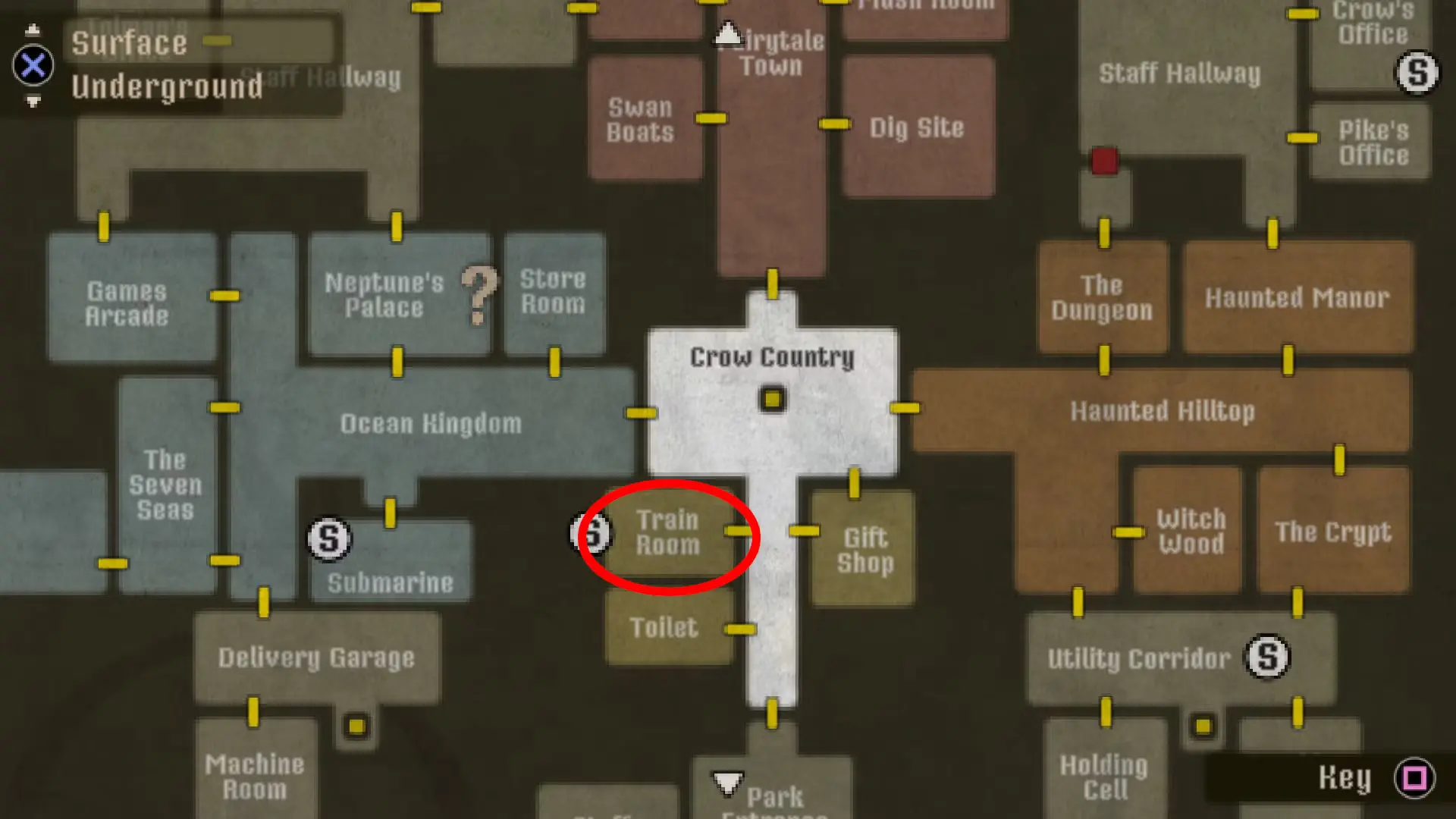
Now indie developers have embraced all of these qualities for their Retro Horror masterpiece; this time, with full intentionality.
The Lost Media Aesthetic
For some reason, we humans are drawn to finding horror in what we perceived as innocent, childish or for the lack of a better word, “nice”; like dolls that are cursed, children that are haunted by demons or joyful childhood memories that hide a dark truth our simple mind could not comprehend yet. Since many of the millennials and zoomers grew up with video games and children’s cartoons, cursed media has replaced cursed dolls for them as the source of this kind of horror.
This idea of lost media or cursed media has become a new sub-genre in horror, with varying degrees of meta-ness to it. Some are literally about a media that is cursed – like Amanda the Adventured which is about a cursed children’s program – and some try to capture the feeling. The idea of making a game that seems like a lost piece of media from 20 years ago feels thrilling in the first place. It’s like you have found something that you shouldn’t have.
When you look at the screenshots of Labyrinth of the Demon King and see that it could be a lost PS1 game from 2000, it makes you feel a certain way. When horror moves beyond current trends and goes back to the past, it feels less communal, less safe and therefore, scarier.
Lost media horror basically weaponizes your nostalgia against you. VHS has been a big part of the childhood of the 80s and 90s kids, so of course retro horror games use the grainy VHS filter to infiltrate that nice memory. Animatronics were an attraction in restaurants and entertainment centers for children in 1980s and 1990s, so of course Five Night at Freddy’s had to turn them into uncanny valley slasher villains. And PS1 graphics was the symbol of the innocent time we spent on our console, having fun after a long day in school, so now, of course it should be a source of horror.
Of course, the desire to find horror in what was innocent turns dark tuns in real life. There are conspiracy theories about the existence of underground tunnels in Disneyland, used for trafficking children, certain beloved Hollywood actors and directors being parts of monstrous clubs that do unspeakable things and children’s cartoons being full of dark and corrupting subliminal messages.
The validity, or lack thereof, of these theories is outside the scope of this article, but there is a general feeling among people that the world they grew up in and thought was innocent was anything but. The fascination with these conspiracy theories is in line with all these retro horror games using PS1 aesthetics. They both convey a deep-rooted psychological realization: we had a beautiful sheltered childhood and now, that web of lies that kept us safe is crumbling. We might as well come to terms with the fact that whatever or whoever made our childhood great was dark as hell and we were too innocent to realize it. It’s time to come to terms with that.
The Uncanny Valley Dreamlike Quality of PS1 Graphics
It’s true that people are desperately trying to make the innocence of their childhood dark for themselves and on their own terms, before reality does so, but they simply couldn’t do this with every style and aesthetics, because there has to be potential for creepiness in the first place. PS1 graphics is perfect for that. The thing about PS1 graphics is that it already feels half-formed, even at its best.
The characters have stiff, puppet-like animations. Their faces are often little more than smeared, low-resolution textures with eyes that don’t blink and mouths that don’t move. The environments wobble with texture warping and dithering. Shadows behave unnaturally. Perspective breaks. It’s not quite realistic, but not quite abstract either; it’s stuck in between. And it’s in that in-between that horror thrives.
Read Also: Power of Animation in Video Games | Techniques, Tools, and Future Trends
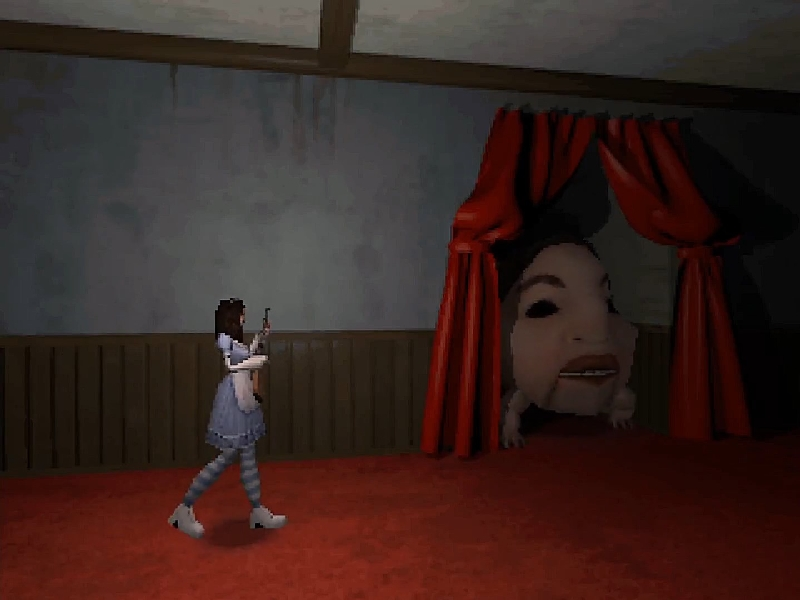
PS1 visuals exist in a kind of dream logic, where things look familiar but behave wrong. A hallway that feels too long. A face that seems too still. A town that feels small and empty, but not quite. The limitations of the PS1 like low draw distance, jittery polygon edges, harsh lighting, lo-fi audio compression, all contribute to an atmosphere that’s inherently off. It’s a world that always feels like it’s about to come apart, like it can’t contain what it’s hiding. I remember some of the creepiest moments I had in gaming were during the old Harry Potter games on Playstation 1, when he was doing trials in an empty Hogwarts. The unintentional creepiness is hard to explain, but it had a long-lasting impact on me.
This makes PS1 graphics uniquely qualified to evoke what we might call “the horror of uncertainty.” Not the jump scare, not the gorefest, but the quiet dread that something is watching you from just outside the fog. Or that the room you’re in didn’t exist a moment ago. It’s the digital cousin of a fever dream.
In modern games, everything is too clear, too polished, too explained. But in PS1 horror, abstraction and obfuscation are the mood. Horror doesn’t need more pixels; it needs more ambiguity and PS1 graphics provides exactly that.
Read Alos :Eerie atmospheres | Dive into atmospheric horror
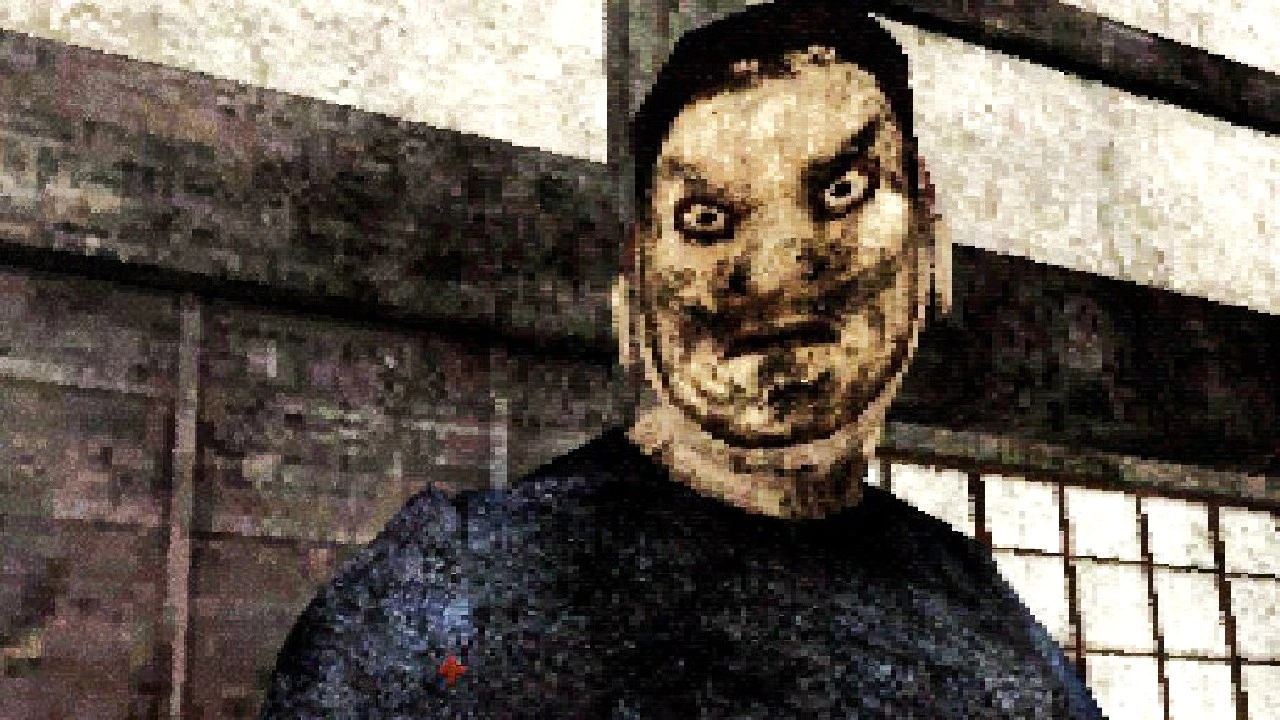
There’s another more practical reason PS1-style horror has become so prevalent: it’s achievable. You don’t need millions of dollars or hundreds of artists to build a game in this style. One person, with a decent knowledge of Unity or Godot, can model crude 3D assets, layer them with VHS filters and create something terrifying in a few months. Retro horror games aren’t trying to compete with Resident Evil Village or The Callisto Protocol; they’re speaking an entirely different language. And increasingly, players are listening.
Retro Horror: The Modern Campfire Ghost Story
Retro horror isn’t just a scattered trend, but has coalesced into a fully-fledged microgenre. Online communities like Haunted PS1, the annual Haunted PS1 Demo Disc, Itch.io horror jams, and anthologies like Dread X Collection have become incubators for a new wave of horror design. These aren’t polished vertical slices meant to attract publishers; they’re experimental, strange, and often deeply personal.
In these digital spaces, developers are encouraged to embrace the jank, not fix it; to play with the weirdness of low-poly models and cursed audio like raw materials for emotional expression. The result is a kind of lo-fi punk horror; unpolished but potent, anarchic in spirit yet deeply attuned to mood.
What ties these games together isn’t just their shared visual DNA, but their ethos. This is horror by way of zine culture, short-form, hand-made and ideologically scrappy. Some games are barely 10 minutes long. Some are unfinished. Others are clearly built on reused assets and glitchy engines. But that doesn’t diminish their impact; in fact, it enhances it. These projects feel like found objects, like corrupted files from a parallel timeline where horror games evolved differently. The imperfections aren’t obstacles; they’re part of the scare. It’s a reminder that horror doesn’t have to be expensive or technically advanced. It just has to be felt.
These communities have also created a kind of folk horror for the digital age. Not in the sense of rural cults or pagan rituals, but in the way these games are shared; like stories whispered around a fire. You don’t “buy” most of them; you don’t see “ads” for them; you stumble upon them.
You play them late at night, alone, headphones on, not knowing what to expect. Many of them feel unfinished because they are, many of them are unfinishable because that’s how they were designed to be (like Sad Satan, the infamous Dark Web horror oddity), but that incompleteness only adds to the vibe, like an urban legend with no clear ending.
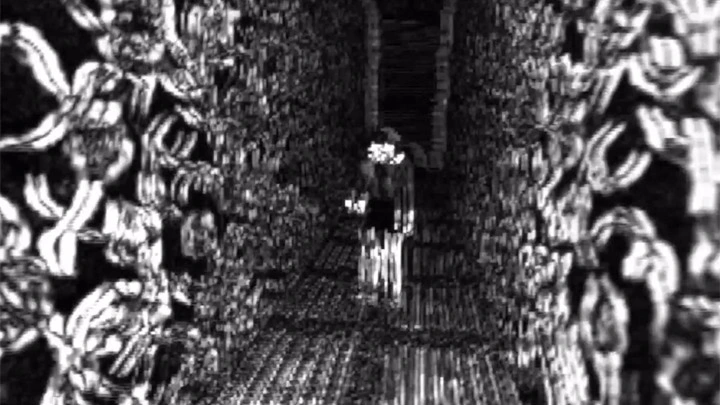
In a world that’s becoming too clear, too clean, too algorithmically optimized, maybe it makes sense that the scariest place to be is somewhere blurry, broke and deeply familiar. Retro horror with PS1 graphics isn’t about fidelity to childhood memories, it’s about the feeling behind them. And sometimes, the most terrifying feeling is nostalgia left to rot.