


Alchemy games blend creativity, experimentation, and discovery, offering players a form of interaction that feels closer to curiosity-driven play than traditional power progression. Instead of chasing higher stats or faster reflexes, these games ask a different question: what happens if I try this?
The problem is that alchemy-themed games are scattered across many genres. Some are deep RPG systems, others are casual puzzle toys, and a few only use alchemy as a light side mechanic. For players interested specifically in alchemy as a core experience, finding high-quality titles can be surprisingly difficult.
That matters because well-designed alchemy systems encourage exploration, learning through failure, and meaningful experimentation. When done right, they create a sense of ownership over discovery that few other mechanics offer.
This blog post of Polydin highlights some of the strongest alchemy-focused games to play in 2025, explains how their systems differ, and helps you choose the one that fits the kind of alchemy experience you are actually looking for.

Need Game
Art Services?
Visit our Game Art Service page to see how
we can help bring your ideas to life!
What Exactly Are Alchemy Games?
At their core, alchemy games are built around combining ingredients, discovering recipes, crafting potions, or transforming elements to unlock progress. The defining trait is not crafting itself, but experimentation. Outcomes are learned, not handed to the player.
Alchemy works so well in games because it supports non-linear progression. Players learn by testing ideas, failing safely, and gradually understanding hidden systems. That flexibility allows alchemy to fit many genres, from JRPGs and management sims to puzzle and sandbox games.
The video game genre remains largely indie-driven, not because it lacks appeal, but because alchemy systems require careful tuning and player trust rather than spectacle. In 2025, that space is healthier than ever.
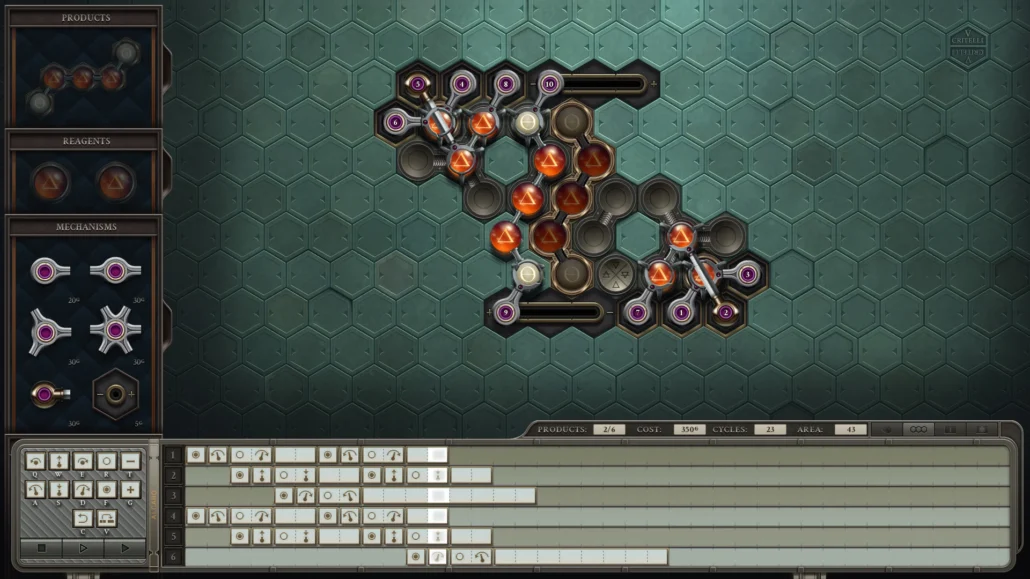
The Top Alchemy Titles You Should Not Miss This Year
Rather than ranking these games absolutely, it is more useful to group them by alchemy depth and intent.
Deep Alchemy Systems
Potion Craft
Genre: Alchemy simulator, management
Release: Full release 2022, highly active through 2025
Developer: Niceplay Games
Potion Craft is one of the clearest examples of alchemy as a primary gameplay loop. Brewing is tactile and experimental, with players physically navigating ingredients across a potion map rather than following rigid recipes. Discovery feels earned, not scripted.
Its strength lies in how failure is informative. Even unsuccessful brews teach spatial logic and ingredient behavior. The shop management layer adds structure without overwhelming the alchemy itself. Players looking for hands-on experimentation will find this one of the most rewarding systems available.
Atelier Yumia: The Alchemist of Memories
Genre: JRPG, crafting RPG
Release: 2025
Developer: Gust (Koei Tecmo)
The Atelier series has long treated alchemy as more than crafting, and this entry continues that tradition. Alchemy synthesis affects combat strength, exploration options, and narrative pacing. Systems are deep, sometimes complex, but intentionally so.
This is not a casual experience. Players are expected to engage with layered mechanics, resource quality, and optimization. In return, alchemy becomes the backbone of progression rather than a supporting feature. It is best suited for players who enjoy mastery-driven systems tied closely to character growth.
Casual Discovery Alchemy
Doodle God
Genre: Puzzle, casual creation
Release: Originally 2010, active updates through 2025
Developer: JoyBits
Doodle God represents alchemy in its most abstract form. Players combine elements to unlock new ones in a simple discovery loop. There is no complexity or long-term planning, but the satisfaction comes from curiosity and pattern recognition.
Its value lies in accessibility. This is an entry point for players who enjoy experimentation without pressure. While mechanically shallow, it succeeds by keeping the joy of discovery front and center.
Little Alchemy
Genre: Puzzle, sandbox creation
Release: Original 2010, Little Alchemy 2 updates through 2025
Developer: Recloak
Little Alchemy strips alchemy down to its essence. Combine elements, see what happens, repeat. There is no failure state and no complexity barrier, making it ideal for short sessions or relaxed play.
It is not designed for depth, but that simplicity is intentional. For players who enjoy pure experimentation without systems mastery, it remains one of the most satisfying casual alchemy experiences.
Emerging or Experimental Alchemy
Ways of Alchemy
Genre: Alchemy strategy, narrative card game
Release: 2025
Developer: Dreamside Interactive
Ways of Alchemy approaches alchemy through strategic and narrative systems rather than simulation. Potion crafting is tied to card-based game mechanics and story choices, creating a more abstract but thematic experience.
As a lesser-known indie title, it does not yet have the ecosystem or longevity of more established games. However, its willingness to blend alchemy with narrative decision-making makes it worth watching, especially for players interested in experimental design rather than mechanical realism.
Bottom Line
Alchemy games stand out because they reward curiosity over efficiency. The best ones do not rush players toward optimal solutions. They let experimentation breathe, allowing failure to feel like progress rather than punishment.
In 2025, the genre offers something for nearly every kind of player. Whether you want deep systems that intertwine with combat and narrative, or a relaxed space for pure discovery, strong options exist. The most successful alchemy games share one trait above all else: they make every experiment feel meaningful, and every discovery feel earned.
FAQs

Are alchemy games more casual or hardcore?
Alchemy games can be either, and that flexibility is part of what makes the genre interesting. Some alchemy games are designed around quick experimentation and simple discovery, making them easy to pick up and play in short sessions. Titles like Little Alchemy or Doodle God focus on curiosity rather than mastery, with no penalties for failure and very low mechanical complexity.
On the other end of the spectrum, alchemy can form the backbone of deep, demanding systems. Games such as Potion Craft or the Atelier series integrate alchemy into progression, economy, and combat balance. These experiences reward planning, system understanding, and long-term experimentation, and they often expect players to learn through trial and error.
Most alchemy games fall somewhere in between. What defines the experience is not difficulty, but intent. If the game treats alchemy as a sandbox for discovery, it tends to feel casual. If it uses alchemy as a progression system with consequences, it becomes more hardcore.
Do alchemy games require a lot of grinding?
Not necessarily. Whether an alchemy game feels grind-heavy depends on how its systems are designed, not on the presence of alchemy itself. Well-designed alchemy games focus on learning and experimentation, where progress comes from understanding ingredients and interactions rather than repeating the same actions endlessly.
In games like Potion Craft, gathering ingredients supports experimentation, but progression mainly comes from discovering new effects and refining techniques. Repetition is usually optional, and grinding can be avoided once players understand how systems work. Similarly, Atelier titles reward smart synthesis and resource planning more than raw time investment.
Casual alchemy games such as Little Alchemy or Doodle God remove grinding almost entirely. There are no resource loops to farm, and progress is driven by curiosity rather than accumulation.
Grinding tends to appear only when alchemy is tied to traditional RPG progression or poorly balanced economies. When alchemy systems are built around discovery instead of repetition, they stay engaging without demanding excessive time investment.