

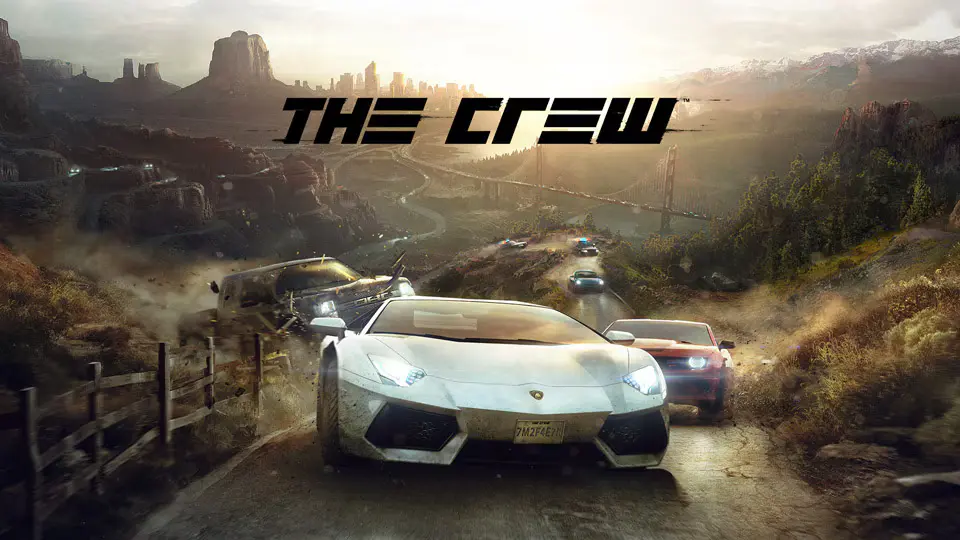
“Stop Killing Games” campaign has been all the rage recently and for good reason. The movement speaks to a frustrating reality that every gamer has either experienced or fears: imagine waking up one day, opening your Steam library and realizing that a game you paid full price for, a game you liked, maybe even loved, has just vanished. Not because of some freak data loss, not because you pirated it, but because the company that made it simply decided: “We’re done here.” That’s exactly what happened when Ubisoft shut down the servers for The Crew, a racing game released in 2014.
The servers went offline, and poof, it was gone. Completely. Even if you just wanted to do a solo time trial, even if you just wanted to hear your digital car go vroom, tough luck. The game is no longer playable, period. Hope you enjoyed your time with it. Because it was rented. You just didn’t know it.
Naturally, people were angry. But one person was really angry. His name is Ross Scott, a longtime gaming YouTuber behind the channel Accursed Farms, and the guy didn’t just vent on Reddit or make a spicy meme-sparkled video. He launched a campaign. A real one. With petitions, spreadsheets, lawyers and actual legislation in its sights.
It’s called Stop Killing Games, and it’s not just another online tantrum. It’s a full-on digital consumer rights movement aimed at forcing publishers to give players some sort of protection when they shut down online-only games. Offline modes, private server options, anything. Just don’t brick the damn thing.
And against all odds, it’s working.
We had already voiced our concern about game preservation in Game Preservation Matters, so Where Should we Draw the Line for Game Remakes?, so the fact that this campaign is taking off and has attracted the attention of big influencers like xQc, MoistCr1TiKaL, Asmongold, PewDiePie and jacksepticeye makes us extra invested in how it will unfold. But without further ado, let’s see how this whole thing started.
How Did It All Start?
It all started with The Crew. Ubisoft announced they’d be shutting it down in early 2024, and when the day came, they didn’t just shut off the multiplayer servers. They killed the entire thing. Even if you bought the game and wanted to use its single-player features, you couldn’t. It was DRM-locked and dead.
Things like this had happened in the past, but in this particular case, that was the last straw for Ross Scott. He published a video laying into Ubisoft, arguing that this wasn’t just bad business, it was borderline theft. If people buy a game and can’t play it anymore through no fault of their own, what exactly did they pay for?

Scott went further. He created a site. He made spreadsheets tracking every online-only game that’s ever been killed or is in danger of being killed. (Spoiler: it’s a lot.) And most importantly, he launched a European Citizens’ Initiative, a legal petition that, if it reaches one million verified signatures, forces the EU Commission to at least respond and potentially take action.
His goal? Simple: make it illegal for publishers to completely kill a game people paid for without offering some kind of fallback. Offline mode, private server support, anything.
And while the premise sounds idealistic, it tapped into a very real and very widespread sense of frustration among gamers. The idea that what we buy isn’t really ours anymore, and no one told us.
Stop Killing Games Gaining Traction
You’d expect this kind of campaign to make a bit of noise on Reddit, get a Kotaku write-up and then disappear, right?
Wrong.
By July 2025, the campaign’s EU petition had crossed the one million verified signature threshold. That’s not “likes on a viral post.” That’s one million people, legally identifying themselves and submitting a formal demand to the European government.
The campaign also spread to the UK, where it hit over 130,000 signatures, enough to trigger a parliamentary debate. Even in the US, where no formal petition exists (yet), people started organizing, spreading awareness and supporting the movement through Patreon and social channels.
What made it stick? Probably the simplicity of the message. Nobody’s asking for source code. Nobody’s demanding that Ubisoft keep their servers online forever. The ask is literally: don’t erase stuff people bought. That’s it.
And the scary part is, it’s not a rare occurrence. According to Scott’s spreadsheet, out of 731 online-only games that have existed so far, 68% are either already gone or will be gone soon. Not patched. Not downgraded. Just deleted. As if they never existed.
The movement got a major boost when European Parliament Vice President Nicolae Ștefănuță openly supported it, stating, “A game, once sold, belongs to the customer, not the company.” Not exactly a revolutionary idea. But somehow, in 2025, it feels like one.
Why Do Publishers Do This?
Short answer? Because they can. And because there’s no incentive not to.
Shutting down a game saves money. Legacy servers cost resources: maintenance, moderation, security patches, compatibility updates, even legal overhead. Once a game stops making money, it becomes a liability. And in the eyes of most big publishers, nostalgia isn’t a business model.
There’s also control. Digital-only games with always-online requirements give publishers full power over access. That’s not a bug; it’s a feature. It lets them throttle engagement, push players to sequels or sunset older titles without having to support them. The less control consumers have, the more leverage publishers get.
And don’t forget planned obsolescence. If they keep older games alive, maybe you won’t buy the new one. If they kill your access, suddenly that sequel you weren’t sure about looks more appealing. Publishers love shiny new things and they’d rather you forget the old ones existed.
So no, it’s not about technical impossibility. It’s about risk, cost and leverage. They’re not deleting games out of necessity. They’re deleting them because it’s easier, cheaper and nobody stops them.
Until now.
Why Do Gamers Care?
When a game disappears, it’s not just a financial loss. It’s a cultural one. And more importantly, it’s a personal one.
The conversation around Stop Killing Games often gets bogged down in technicalities, DRM this, EULA that. But for players, the grief over a lost game isn’t about line items in a license agreement. It’s about memories. Time. Identity. The experience of existing inside a digital world that someone, somewhere, decided to pull the plug on. People literally download and play the ROMs of games from 4 decades ago. Why do game publishers think video games are such a temporary medium?
When The Crew died, people didn’t just lose access to cars and races. They lost progress. Leaderboards. Screenshots that now mean nothing. Some lost a social space where they’d hung out with friends for hundreds of hours. And that’s just one game. Think about the thousands of niche MMOs, obscure indies and mid-tier experiments that vanish every year, games that had small, loyal communities now reduced to a few clips on YouTube and a dead subreddit.
Imagine if a publisher said: “Hey, by the way, we’re shutting down your Instagram account. All your posts, messages, DMs, gone. We just don’t want to support it anymore.” People would riot. But when a game vanishes, the assumption is: “Oh well, that’s how the industry works.”
Why? Because we’ve been conditioned to expect it.
That’s what makes Stop Killing Games important. It breaks that conditioning. It says: no, this isn’t normal. It shouldn’t be normal. Just because it’s digital doesn’t mean it’s disposable.
You know how people freak out when Netflix removes a show they love? Now imagine if instead of removing the show, they removed your copy of it. The hypothetical DVD you bought. The one you rewatch every year like a ritual. That’s what’s happening with games. Only worse, because games aren’t passive. They’re participatory. When a game dies, part of the player dies with it. And unlike removed Netflix shows, online-only games are not even piratable after they’re shut down.
There’s also a generational angle to this. In ten years, we’re going to have adults who grew up in Destiny, Overwatch, Roblox, Fortnite. Games aren’t just pastimes anymore; they’re digital childhoods. Cultural pillars. Memory containers. We need to start treating them that way.
This isn’t nostalgia for nostalgia’s sake. It’s about recognizing that games are art, interactive, evolving, community-driven art. And when you destroy them, you destroy more than data. You destroy meaning.
That’s why this movement matters. Not because it’s anti-corporation. Not because it’s nostalgic. But because it’s trying to stop something deeply human from being treated like obsolete software.
It’s asking publishers to treat our experiences with a little more respect.
Is that really so much to ask?
How did Ubisoft Respond?
Ubisoft, of course, didn’t just sit there and take the PR punches. Their CEO eventually responded, claiming that “support for all games cannot last forever.” He argued that shutting down The Crew was a necessary business decision, and maintaining legacy infrastructure simply isn’t feasible.
To which I say: sure. You don’t have to run servers until the end of time. No one’s asking for that. But bricking the whole game? Making it completely unplayable, solo, local, anything? That’s not a sunsetting. That’s a digital funeral.
Ubisoft and industry lobbying groups like Video Games Europe say the movement is “unrealistic.” They claim it would stifle innovation, be too costly or even expose companies to legal liabilities if they had to keep old games around or allow third-party servers.
Here’s the thing: other companies already do it. Battlefield 2 fans run private servers. City of Heroes was resurrected by the community. Even World of Warcraft has classic server versions officially supported. So, the idea that it’s technically impossible? That’s nonsense. The only thing it costs is a bit of effort and the willingness to not treat customers like disposable ATMs.
So yes, Ubisoft has a case. But it’s a weak one. Like saying, “We had to torch the local library because we didn’t want to pay for the electricity bill.”
The Pirate Software Incident
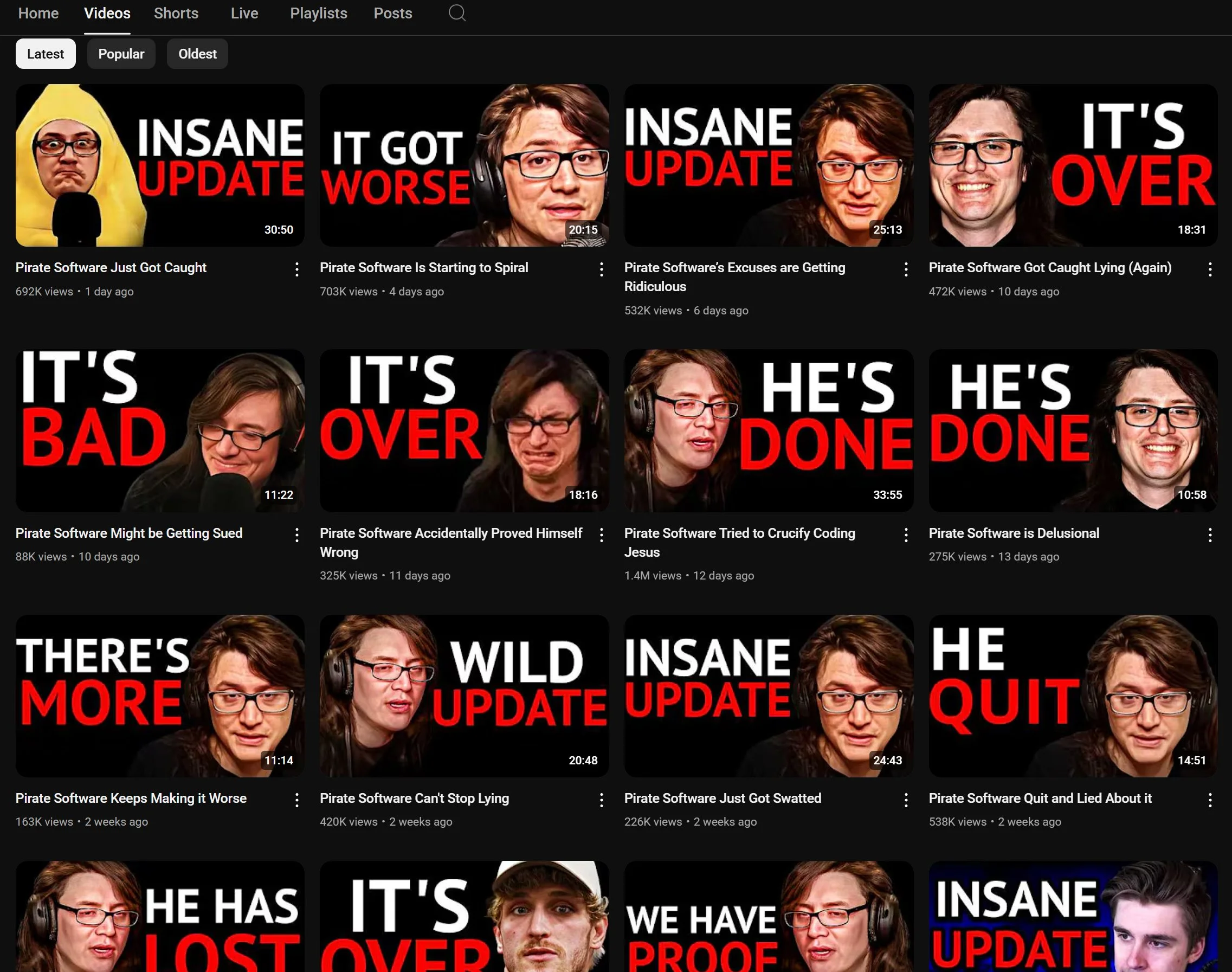
One fun little subplot: indie dev Pirate Software, led by Twitch streamer and developer Jason Thor Hall, made a misstep when discussing the campaign. During a live stream, Hall claimed that Stop Killing Games was just a “piracy-enabling” effort.
Naturally, the internet ripped him apart. He walked it back the next day, clarified that he misunderstood the campaign’s intent, and issued an apology.
It was a small moment, but telling. Even indie developers, the people most likely to benefit from preservation culture, can get twitchy (no pun intended) when the conversation turns to legal definitions, DRM and ownership.
Lesson? Maybe don’t throw around piracy accusations unless you’ve read the damn petition.
Some Arguments (And Why They Kinda Suck)
Let’s take a minute to address some of the arguments floating around, especially the ones that show up in every comment section like clockwork.
“Online games can’t be preserved, it’s too hard.”
This is one of those arguments that sounds true until you actually look at the facts. Plenty of online games have been preserved by modders, hackers, and hobbyists with zero funding and no help. If a group of volunteers can reverse-engineer a login server, what’s stopping a billion-dollar company from just adding an offline mode?
It’s not about technical impossibility. It’s about effort. And some companies just don’t want to make the effort unless they’re forced to.
“It’s a license, not a product. Read the EULA.”
Yes, legally speaking, most digital games are licenses. But that doesn’t mean the average consumer understands that, or that it’s a fair system. You walk into a store, you click “Buy,” you get a digital file. Nowhere in that interaction does it say: “By the way, we can take this back whenever we want.”
If companies want to keep hiding behind that license language, then fine. But they should be required to label it upfront like a rental. Put it in the store: “$59.99 for Temporary Access.” See how that goes over.
“Just play something else.”
This one is just lazy. Imagine someone burning your favorite book and saying, “There are other books.” That’s not an argument. That’s evasion. People form attachments to specific games, specific communities and specific experiences. You can’t replace The Crew with Forza any more than you can replace Dark Souls with Candy Crush. That’s not how art works.
“You already played it for hundreds of hours and got your money’s worth, so what’s the problem?”
Sure, but imagine if a book self-destructed after you read it once. Or if Spotify deleted albums you hadn’t streamed in a year. Getting your money’s worth doesn’t mean you forfeit ownership. And it’s not about hours played; it’s about access. If anything, the fact that you invested time makes the deletion sting more. It’s not just money lost; it’s memories, progress and a sense of continuity. Also, just because a worse model (pay-per-hour) exists and the CEO of Rockstar/Take Two Interactive hypothetically talked about it, doesn’t make this one okay. That’s not a defense; it’s a threat.
Conclusion: It’s All About Digital Ownership
The real issue here isn’t just The Crew or Ubisoft or even Ross Scott’s video. It’s a much bigger question about what it means to “own” something in the digital age.
If publishers can sell us products and then delete them at will, then we’re not consumers, we’re renters. And not the kind of renters with contracts or protection. The kind that gets booted without notice and told to smile about it. That’s why people are talking about the age of “Digital Feudalism”. Because only in the context of Feudalism the average joe was that helpless against his benefactors.
Stop Killing Games isn’t a perfect movement. It won’t save every game. But it’s one of the first serious attempts to give consumers a seat at the table in an industry that’s increasingly treating its own history and its players like disposable trash.
You don’t need to agree with every part of the campaign. But if you’ve ever paid money for a game and expected to keep it, then this fight is yours too.
And no, asking not to have your games deleted doesn’t make you a pirate. It just makes you a customer who wants what they paid for.