


In today’s saturated gaming landscape, standing out isn’t just about gameplay: it’s about presentation. Game trailers have become one of the most critical tools in a studio’s marketing arsenal, often making or breaking a title’s early perception. Whether it’s a cinematic teaser, a gameplay walkthrough, or a fast-cut montage for social media, a well-crafted trailer can generate hype, build emotional investment, and drive pre-orders long before a game even hits store shelves.
The most successful game trailers don’t just show; they sell. They tell stories, hint at mysteries, spark speculation, and give players a taste of the world they’re about to enter. In an age where first impressions often happen in the span of seconds, the value of a compelling trailer cannot be overstated. From indie hits to AAA blockbusters, game trailers matter because they bridge the gap between concept and community, turning curiosity into commitment.
The Role of Game Trailers in Modern Game Marketing
Game trailers are no longer just optional extras; they’re marketing centerpieces. For both indie developers and AAA studios, the trailer often serves as the first major public reveal, setting the tone for how a game is perceived across media and social platforms. It’s the linchpin of launch campaigns, timed to coincide with gaming expos like E3, Summer Game Fest, or surprise digital drops on YouTube and Twitter (X).
In a world where attention is scarce and competition is brutal, trailers offer a chance to make a splash. A single striking moment—a creature reveal, a narrative twist, a familiar voice—can go viral, drawing millions of views in days and converting casual curiosity into wishlists and pre-orders. They also give developers a way to signal production value, genre, and tone in a concise, cinematic format.
Beyond hype-building, trailers act as multipurpose marketing assets. They’re embedded in store pages, analyzed in YouTube breakdowns, used in press kits, and endlessly reposted on social media. The best game trailers create anticipation loops, feeding speculation and conversation across weeks or even months. In short, they’re not just marketing; they’re momentum.
Read Also: Video Game Trailer Production | A Comprehensive Guide
The Psychology Behind a Great Game Trailer
A great game trailer doesn’t just inform; it triggers emotion, sparks curiosity, and creates a mental imprint. Understanding the psychology behind trailer design reveals why some stick with us long after we hit play.
Mystery
The best trailers know what not to show. A glimpse of a cryptic logo, a weapon dropping to the ground, or a single whispered line can say more than a full gameplay demo. This use of mystery taps into our brain’s natural desire for closure and pattern recognition. When we don’t have all the answers, we start filling in the blanks, often in ways that deepen our engagement. Teasers like Elden Ring‘s first trailer or Death Stranding’s bizarre opening visuals are perfect examples of mystery used to fuel hype and speculation without giving away the story.
Emotion
Emotion is the key to memorability. Whether it’s awe, fear, excitement, or sadness, emotional resonance makes trailers unforgettable. Music plays a huge role here, pulsing synths for action, melancholic piano for story-driven indies, or swelling orchestras for fantasy RPGs. The use of close-up facial animations, dramatic pacing, or unexpected narrative twists can forge a powerful emotional connection in under two minutes. When players feel something, they remember and share it. That’s why games like The Last of Us Part II leaned heavily into emotion in every trailer.
Visual Fluency
Visual fluency refers to how easily the brain processes imagery. Great trailers are composed with clean, iconic silhouettes, intuitive editing, and motion that guides the eye. Rapid cuts are balanced with lingering moments of focus. Studio logos are revealed with weight. Gameplay clips are framed in ways that highlight mechanics while still feeling cinematic. Even typography matters; bold, clear fonts reinforce identity and mood. Visually fluent trailers feel “right,” even when viewed subconsciously. It’s not just about style; it’s about flow.
First Impact: Capturing Attention and Building Hype
In the digital age, attention is currency and game trailers have mere seconds to earn it. Whether they’re being watched during a livestream, autoplayed in a Twitter (X) feed, or clicked on YouTube, the first five to ten seconds are critical. A trailer’s first impact must establish tone, spark curiosity, and make the viewer want more. It’s not just about showing off flashy graphics; it’s about grabbing hold of the viewer’s imagination instantly.
Effective trailers often open with a striking image, a mysterious soundbite, or a moment of high tension. Think of Breath of the Wild‘s reveal trailer: Link sprinting from a Guardian, bow drawn, with no HUD in sight. That single shot told players everything: this was Zelda, but different.
This initial hook sets the stage for the full trailer experience. When done well, it lays the groundwork for hype cycles, media coverage, and community speculation. In fact, the most successful game trailers are engineered not just to inform or entertain, but to ignite conversation. Memes, reaction videos, and breakdowns extend the trailer’s lifespan well beyond the initial drop, turning it into a marketing asset that works for weeks or even months.
Emotional Engagement Through Storytelling
While visuals and gameplay are crucial, it’s the story—or at least the hint of one—that makes a trailer unforgettable. Game trailers that tap into narrative structure can create deep emotional engagement in a matter of seconds. They follow the same principles as film trailers: establish stakes, introduce a central conflict, and tease resolution, often leaving players wanting more.
Even without full context, a trailer can establish character dynamics, emotional tone, and thematic weight. A line of dialogue, a sudden betrayal, or a slow fade on a dying world can carry more impact than a flashy combat montage. Consider how God of War (2018)‘s trailer didn’t just reveal Kratos; it revealed him as a father, instantly transforming audience expectations and inviting emotional investment.
Trailers that prioritize storytelling leave players with a sense of connection before they’ve even touched a controller. They don’t just promise action; they promise meaning. And in an industry increasingly focused on narrative-driven experiences, trailers that capture emotional truth are more likely to generate pre-orders, press buzz, and fan loyalty.
In short, storytelling doesn’t need to spoil the plot. It just needs to hint at a world worth exploring and let emotion do the rest.
SEO & Discoverability: Trailer as Content Asset
Beyond hype, game trailers are also powerful tools for search engine optimization (SEO) and digital discoverability. A well-titled, properly tagged, and smartly described trailer can generate millions of organic views; not just from fans, but from curious browsers, journalists, and algorithm-driven platforms.
Platforms like YouTube are search engines in their own right. Developers and publishers who optimize trailers with targeted keywords (“new open-world RPG 2025,” “survival horror gameplay trailer,” etc.) can significantly improve reach and click-through rates. This is especially valuable for indie studios who rely more on virality and organic discovery than on paid media.
Additionally, trailers embedded in Steam store pages or official websites improve content value and retention. For Google, video signals engagement, boosting a game’s page ranking. On TikTok, Instagram, and X, short trailer cuts can reach new demographics entirely, offering bite-sized hooks that drive viewers to the full trailer or game page.
In a content-driven internet, a trailer isn’t just a pitch; it’s strategic content.
How to Measure a Trailer’s Impact
A beautiful trailer is only as valuable as the impact it creates. In modern game marketing, measuring that impact goes beyond simple view counts. Studios and publishers track a range of metrics to understand how well a trailer performs and whether it’s converting curiosity into action.
Engagement
Engagement includes likes, shares, comments, and watch time. A trailer that sparks discussion, fan theories, or even criticism is already doing its job: it’s being talked about. High engagement usually signals that a trailer resonated emotionally or visually, even if not universally loved. For platforms like YouTube and TikTok, engagement also boosts visibility via algorithms, expanding the trailer’s reach.
Click-Through Rates (CTR)
CTR measures how many people actually clicked on a store page, pre-order button, or wishlist link after watching the trailer. A flashy video with zero follow-up clicks is just entertainment. A strong CTR indicates that the trailer successfully built intent, a key step in the marketing funnel. This metric is especially critical during digital showcases like Steam Next Fest or Xbox events.
Pre-Order or Wishlist Spikes
Nothing screams success louder than a spike in pre-orders or wishlists after a trailer drops. These are hard data points; clear signs that the trailer converted viewers into potential buyers. Steam and console storefronts now let devs track real-time wishlist growth after events, giving direct feedback on how well a trailer lands.
Community Sentiment
Sentiment analysis—automated or manual—looks at how the audience feels about the trailer. Are reactions overwhelmingly positive? Are people confused or skeptical? Comments, fan art, Reddit threads, and YouTube reactions all paint a picture of community mood. A good trailer doesn’t just excite—it builds trust.
Press Mentions
If media outlets are writing about the trailer, it’s making waves. Press coverage not only increases visibility but adds legitimacy. Even short news hits on IGN, Kotaku, or Eurogamer can drive thousands of eyes to a trailer that might’ve otherwise flown under the radar.
Case Studies: Success Stories
Some game trailers don’t just promote a game; they become iconic moments in gaming history. These examples show how trailers, when done right, can elevate a game’s visibility and cultural impact far beyond initial expectations.
Dead Island
Dead Island’s cinematic reveal trailer in 2011 is legendary; not for gameplay, but for its reverse-chronology storytelling and emotional gut punch. The trailer showed the death of a child during a zombie outbreak, played backward in slow motion, set to haunting music. While the final game didn’t live up to the trailer’s emotional tone, the video itself went viral, earning millions of views and dominating gaming news cycles. It remains one of the most talked-about trailers ever released, proof that emotional storytelling alone can sell a concept.

Halo 3
The “Believe” campaign for Halo 3 featured a poignant live-action diorama trailer that showed a moment of reflection rather than action. Accompanied by somber music and slow pans, it framed Master Chief as a legendary hero in humanity’s darkest hour. This unconventional approach stood out among shooter trailers and helped build enormous anticipation. It wasn’t just hype; it was mythology. The campaign was credited with driving one of the most successful game launches of all time.
Resident Evil 5
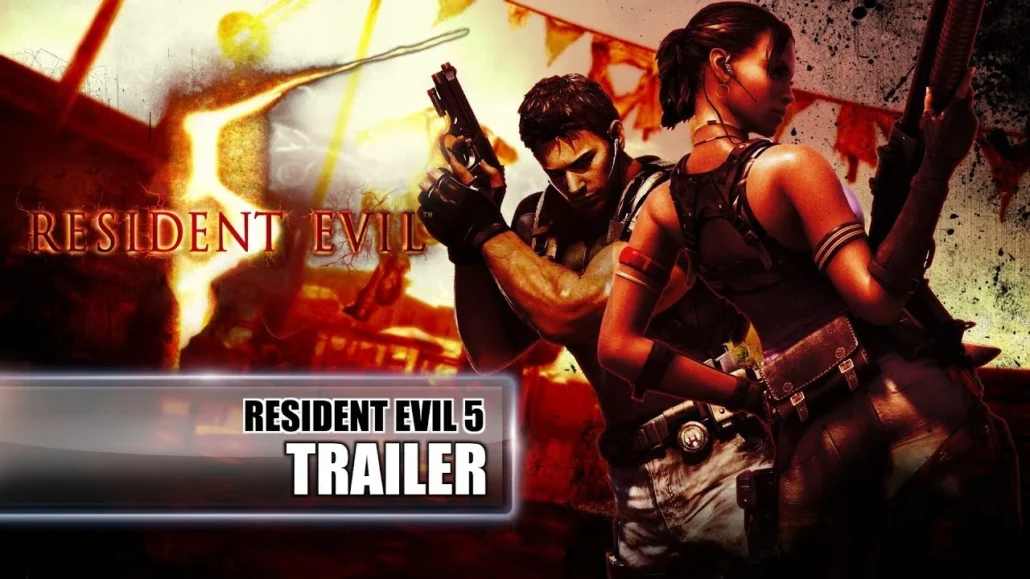
The trailer for Resident Evil 5 sparked immediate attention not just for its visuals but for its setting, sun-drenched African villages, a departure from the franchise’s typical dark corridors. The footage introduced co-op gameplay and new enemies, showing a clear evolution from Resident Evil 4. While it also generated controversy, the trailer succeeded in rebranding the series as a globe-trotting action-horror hybrid. Pre-orders surged, and the buzz carried through to launch, proving the trailer’s power to reshape audience expectations.
The Future of Game Trailers: What’s Next?
As games evolve, so do the ways we promote them. The traditional trailer format—one-size-fits-all and broadcasted via YouTube—is beginning to shift. In the next few years, we can expect game trailers to become more adaptive, immersive, and interactive.
AI-Powered Personalized Trailers
With AI-generated video and real-time content tailoring on the rise, future trailers could adapt to viewer preferences. Imagine logging into Steam and seeing a trailer that emphasizes narrative if you’re a story-driven gamer, or gameplay systems if you’re a mechanics-first player. AI could also auto-generate highlight reels based on what’s trending. Personalized trailers may soon replace static previews entirely, offering a unique first impression to every viewer.
Read Also: AI Tools for Game Development | Transforming the Future of Game Creation
Interactive and Branching Trailers
Trailers may evolve into playable experiences. Think “choose your path” formats, where viewers select between story threads or gameplay styles within the trailer itself. Netflix and YouTube have already dabbled in interactive video, and the technology is becoming more accessible. These branching trailers could offer a taste of agency, a sample of gameplay disguised as marketing. For RPGs, narrative games, or decision-driven titles, this format could be game-changing.
Immersive AR/VR Teaser Experiences
As virtual and augmented reality platforms mature, trailers may no longer be something you watch; they’ll be something you enter. Studios could release 3D teaser environments as explorable slices of their worlds. Imagine walking through a haunted hallway from an upcoming horror title or standing in the center of a battlefield moments before the action begins. These immersive trailers could redefine how hype is built.
Short-Form Cuts for Social Media
With platforms like TikTok and Instagram Reels dominating attention spans, the future of game trailers includes fast, stylized micro-cuts designed for swipe culture. These short-form trailers (5–15 seconds) won’t replace the main cinematic, but they’ll act as aggressive outreach tools—each one a miniature ad engineered for virality.
Conclusion
Game trailers have become indispensable in the modern gaming ecosystem. More than mere previews, they’re storytelling vehicles, emotional touchpoints, and powerful marketing tools that bridge the gap between developers and players. In an era where attention spans are short and competition is fierce, a trailer’s ability to captivate, intrigue, and inspire action can determine a game’s fate. Whether you’re a developer crafting your next big reveal or a player eagerly awaiting the next trailer drop, one thing is clear: game trailers matter. They don’t just show us what games will look like; they tell us why we should care.