

In games culture and studio boardrooms alike, The Popular Video Game Characters don’t just “happen.” They’re designed, tested, and refined until they read at a glance and feel inevitable in play. For developers, The Popular Video Game Characters are blueprints: silhouettes that pop at thumbnail size, verb sets that align with personality, and stories that invite the community to co-author the myth.
This article by Polydin game studio, treats popularity as a craft problem you can solve—part design, part narrative, part timing—and translates the tricks behind the greats into takeaways for your next character, whether that’s a mascot, an antihero, or a quiet guide through a noisy world.
What Makes a Character Popular
Popularity compounds when three signals align: readability, relatability, and repeatability. Let’s dissect how each one helps create popular video game characters.
Emotional Resonance and Narrative Depth
Mechanics may hook, but emotion holds. Popular characters tend to anchor micro-arcs (risk → learning → small win) inside moment-to-moment play, then echo those beats in the macro narrative. Kratos punishes and protects, and the Leviathan Axe binds both halves through feel; Link’s quiet resolve lets players project identity while the toolset (glide, climb, fuse) frames curiosity as courage.
Even minimalist characters can carry emotional weight when failure states feel fair and recovery feels earned. For teams, the practical move is a “motivation matrix”: list what the character wants, what they fear, what they’ll sacrifice, and what actions express those traits in play, not just in cutscenes. Then trim features that don’t reinforce those verbs.
Accessibility is emotional design, too. Subtitles with speaker tags, color-blind-safe palettes, difficulty assists that don’t shame—these signal respect. When players feel seen and supported, they bond with the character who “walks them through” the world. That bond is a multiplier for every narrative beat you try to land.
Design Memetic Appeal and Franchise Legacy
Memes are cultural speedruns: compressed signals that travel far. Characters with memetic appeal have decisive shapes (Mario’s cap/mustache, Pikachu’s lightning tail, Sonic’s spikes), bold color blocking, a distinct locomotion style, and a quotable cadence (barks, stingers, UI motifs). Legacy then adds gravity. Each sequel deposits “design equity” that the audience defends. The craft is novelty with anchors: rotate fresh mechanics around a non-negotiable core, update materials without erasing silhouette, let spinoffs stress-test elasticity without breaking identity. Internally, document your invariants (“must keep: silhouette, core verb, palette; may change: costume, camera distance, weapon loadouts”) so freshness never drifts into brand amnesia.
Sound is part of memetic DNA: leitmotifs, UI click-pops, even the way a weapon returns to hand. If your audio sting can be hummed, it will be memed; if it’s memed, it propagates your character even where gameplay can’t go.
Merchandise and Cross-Media Presence
Merch is a design mirror for the popular video game characters. Plush-friendly characters push toward soft curves and clear planes; action-figure-friendly heroes prefer modularity (gear that swaps, joints that read). Cross-media asks: can the essence survive another medium’s grammar? In film and TV you lose input but gain close-ups and score; in comics you gain panel composition but lose timing control.
Characters that travel well can be summarized in a single sentence of playable identity (“a hopeful plumber who jumps to turn problems into platforms”). If licensing teams can’t pitch the core in ten seconds, players won’t either. Treat every product photo, poster, and cameo as a silhouette test and a verb test.
Practical Game Art Pipeline pipeline: style guides with pose libraries, color values, fabric notes, and “do/don’t” examples keep partners on-model. QC turnarounds catch drift early, so your hero doesn’t mutate across regions. The more usable your guidelines, the more faithfully the character propagates.
Top 10 Most Popular Video Game Characters of All Time
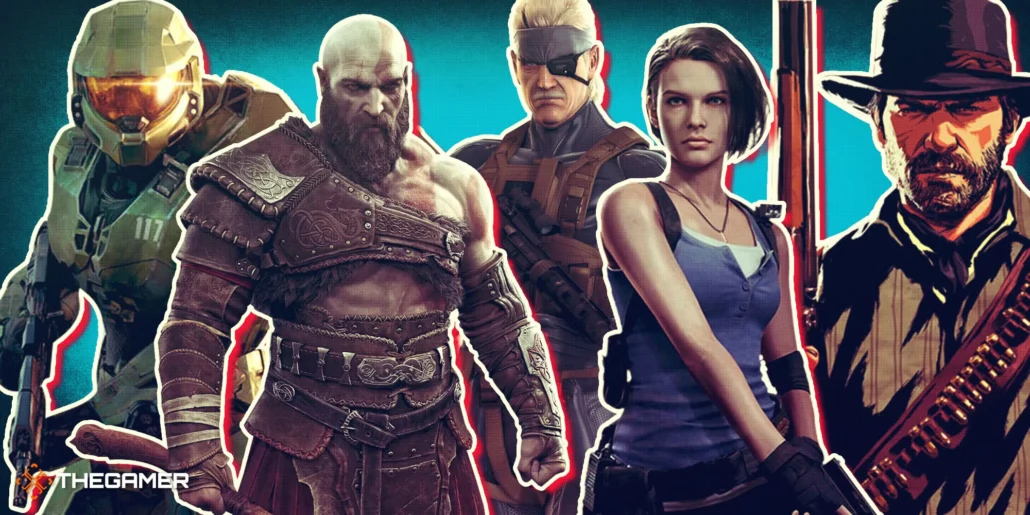
The best way to know about the popular video game characters is to know the best examples. Here are the best:
Mario (Super Mario series)
Primary colors, round shapes, and one joyous verb—jump. Mario’s design converts precision platforming into friendly spectacle: readable arcs, forgiving hitboxes, and rituals (flagpoles, 1-Ups, fireworks) that celebrate the core action. He scales across 2D, 3D, and party spinoffs because the anchor fantasy—turning obstacles into playgrounds—survives any camera. Takeaway: build ceremonies around your verb so play breeds affection.
Agent 47 (Hitman)
A minimalist silhouette (bald head, barcode, black suit) carrying maximal implication. Agent 47 is a sandbox in human form: routes, disguises, accidents, clockwork NPCs. The fantasy is competence—players author elegant solutions within rules that never lie. Takeaway: let the character’s temperament be the rules; cool precision outside, systemic clarity inside.
Pikachu (Pokemon)
A friendly face for a social ritual. Pikachu bridges collection, companionship, and combat with soft curves, bright yellow, and energetic motion. It reads at sticker size and aircraft size, which is why it anchors everything from plushes to theme parks. Takeaway: pair a simple emotion (“befriend”) with a scalable system (collect, evolve) and you get love that renews each generation.
Sonic the Hedgehog (Sonic)
Speed as identity, attitude as punctuation. Sonic works when level grammar, camera, and controls conspire to make “fast” safe and legible—banked turns, loops, generous telegraphing, music that surges. The spikes and shoes do the rest on the shelf. Takeaway: if motion is your fantasy, give players sightlines and forgiveness so confidence becomes momentum.
Kratos (God of War)
From vengeance to vulnerability without losing power. Kratos’ modern arc binds emotion to muscle memory: the Axe’s recall click is a character beat, and parenting choices echo in pacing and side-quest stakes. Popularity here is trust: players believe their mastery will be respected by the story. Takeaway: weld narrative turns to mechanical upgrades so feelings live in the hands.
Link (The Legend of Zelda)
A quiet proxy framed by curiosity. Link’s silence invites projection; his toolkit makes wonder playable. Zelda games teach in the wild—see, try, recombine—so mastery feels discovered, not delivered. Takeaway: let tools, not speeches, define personality; design problems that reward noticing.
Lara Croft (Tomb Raider)
A silhouette that modernized without erasing itself. From 90s icon to survivor-archaeologist, Lara held two invariants: adventure and competence. Platforming sells grace; puzzles sell wit; ruins sell wonder. Takeaway: when you reboot, identify three sacred pillars—and let everything else flex.
Pac-Man (Pac-Man)
Three shapes tell the whole story: circle, mouth, dots. Pac-Man’s popularity is legibility plus inversion—the thrill of prey becoming predator when the rules flip. The character is the verb, which is why it still sells T-shirts and arcade cabinets. Takeaway: if your core loop fits on a napkin, your character can be an icon.
Master Chief (Halo)
Armor as identity, visor as mirror. Halo’s kit—two weapons, grenades, melee, shield regen—turns the Chief into a recognizable rhythm more than a face. The silhouette sells hardware; the rules sell encounters that feel musical. Takeaway: build a combat cadence that players can hum.
Ezio Auditore (Assassin’s Creed)
Charisma choreographed across rooftops. Ezio married a personal revenge arc to traversal that looked and felt elegant. Cloak, hidden blade, panoramic cities: a postcard of Renaissance power fantasy. Takeaway: reward style with advantage; when it looks cool, it should play better.
The Cultural Impact of Popular Video Game Characters
The popular video game characters are cultural middleware. They carry platform identity (Mario for Nintendo, Chief for Xbox), national soft power (Pikachu for Japan’s media export), and generational memory (Pac-Man for the arcade boom). In classrooms, runway shows, and parades, they act as shorthand for optimism, rebellion, or comfort. With that reach comes custodianship: every redesign is a public negotiation between freshness and heritage. Internally, treat the audience as co-authors; externally, design rituals (poses, greetings, audio stingers) that make real-world interactions feel like stepping into the game.
Game Characters in Movies and TV
Adaptations test whether a character’s essence survives without input. You trade agency for close-ups, pacing for montage, UI for dialogue. The winners keep silhouette, verb, and vibe intact, then let the medium add its magic.
Mario
On screen, Mario’s non-negotiables—color language, brotherly bond, playful perseverance—anchor set pieces built from pipes, blocks, and music cues. The best scenes treat puzzles as choreography, not exposition. Design note: list three “must-keeps” before any adaptation; cut anything that dilutes them.
Lara Croft
Cinematic Lara works when traversal and problem-solving are character beats: grit in a climb, insight in a lever puzzle, consequence in a misstep. Trim lore; amplify motion and tactile stakes. Design note: translate verbs to stunts and props, not monologues.
Merch and Brand Collaborations
Licensing succeeds when a character reads at a glance and plays well with others stylistically. Simple planes welcome fashion collabs; bold accents survive co-branding without getting lost.
Pikachu
A global ambassador precisely because it’s friendly, bright, and instantly legible. From capsule wardrobes to airline liveries, Pikachu slots in without bending partner aesthetics. Design note: keep a “graphic kit” (poses, face angles, tail marks) partners can deploy consistently.
Sonic
Sonic partnerships lean into motion—sneakers, sportswear, “speed” metaphors. The thumbs-up and wink pose library pays licensing dividends. Design note: invest in poseability and clean turnarounds; they become your universal visual language.
Cosplay and Fan Creations
Conventions and maker spaces are live-ops for identity. Characters that invite hands-on making clear paint schemes, buildable props—gain grassroots reach money can’t buy.
GLaDOS
A villain without a body still became a cosplay staple via prop cores, cables, stark monochrome, and quotable lines. Audio identity carries the load: fans remix voice clips and light rigs to “perform” her. Design note: give communities repeatable hooks—shapes, phrases, motifs—they can recreate at home.
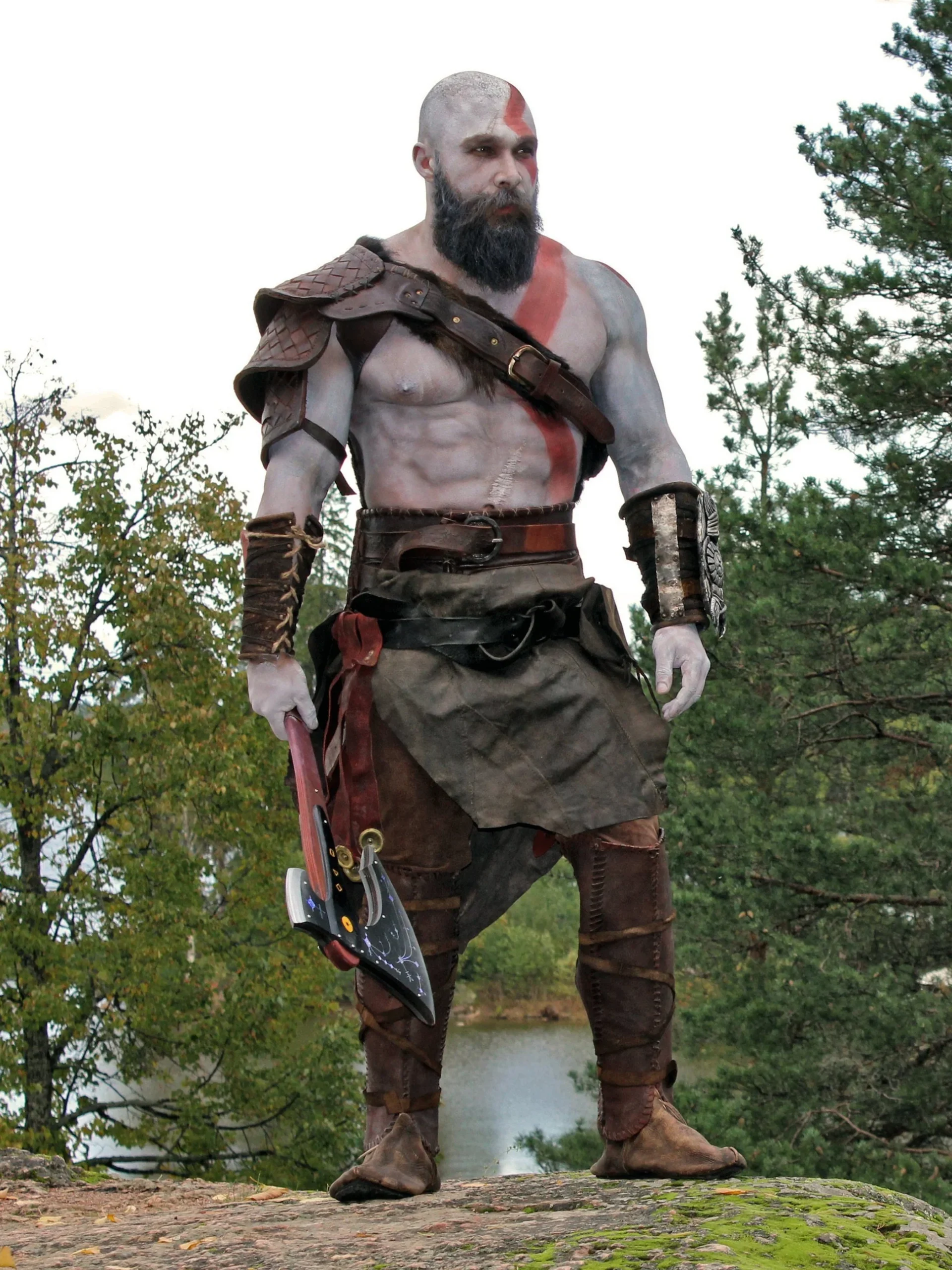
Kratos
Foam axes, leather wraps, ash-white body paint, beard styling: Kratos is a cosplay kit baked into a character. The tactile materials make the fantasy approachable. Design note: publish official patterns or measurements; you’ll multiply con-floor quality and loyalty.
Memes and Internet Fame
Memes are emergent UX. They happen when a character offers repeatable setups that read in three seconds and loop forever in feeds.
Super Nintendo World
Meet-and-greet gestures, oversized props, and ride moments translate game verbs into physical gags. The environment is a photobooth with built-in timing, which is why short clips go viral. Design note: stage “pose → prop → payoff” loops in real spaces the way you stage gameplay loops.
Pokémon
Each season spawns new critters and new riffs while evergreen memes—Pikachu’s face, “It’s super effective!”—act as cultural seasoning. The elemental grid (types, counters) is memetic scaffolding: simple to recall, endless to remix. Design note: clear axes (element, role, mood) create infinite fan creativity.
Guidelines help fame avoid being cringy. Nurture creator programs, share clean assets, and set light-touch rules (credit, tone, no hate symbols) so fan memes grow your character instead of warping it. When the joke is on you and it’s harmless, laugh with the audience; shared humor is loyalty fuel.
Conclusion
Icons are made, not found. Start with a silhouette that passes the thumbnail test, and a verb that the whole team can celebrate in game mechanics and ceremonies. Bind emotion to muscle memory so the story lives in the hands, not just the cutscenes. Guard a few sacred invariants across sequels and experiments, then orbit novelty close enough to warm long-time fans. Build pose libraries, audio stingers, and maker-friendly props so the community can co-own the legend. And when you step into film, merch, or parks, demand that silhouette, verb, and vibe survive the trip.
Do all that with patience and clarity, and your character can join the long line of favorites—proof that The Popular Video Game Characters aren’t just beloved; they’re living design documents for how play, story, and culture meet. If you’re crafting a new face for your studio, start tiny: one-page style sheet, a five-pose library, a 10-second audio motif, and a playable graybox that nails the verb. Ship those in a prototype, watch what fans draw, and tune. Popularity is iterative empathy—meet players where they are, then give them a character they can carry into the rest of their lives.