


In a world of ultra-realistic graphics, low poly art proves that less can still be visually powerful. While many creators continue to chase higher polygon counts and ever-finer detail, low poly has quietly remained one of the most expressive and enduring visual styles in digital art.
Many artists and developers still associate quality with realism. As a result, low poly is often dismissed as outdated, overly simple, or something chosen only when resources are limited. This misunderstanding causes creators to overlook a style that thrives on intention, clarity, and strong artistic judgment.
Low poly art plays a major role across games, animation, VR, AR, and mobile experiences. Studios use it not as a shortcut, but as a deliberate visual strategy that balances performance, readability, and identity. Understanding the artistry behind low poly helps creators make informed stylistic choices rather than defaulting to realism.
This blog post of Polydin game art studio explores the artistry of low poly art, explains what truly defines the style, why it works both aesthetically and technically, and how artists use simplification to create memorable visual experiences.
Need Game
Art Services?
Visit our Game Art Service page to see how
we can help bring your ideas to life!
What Is Low Poly Art?
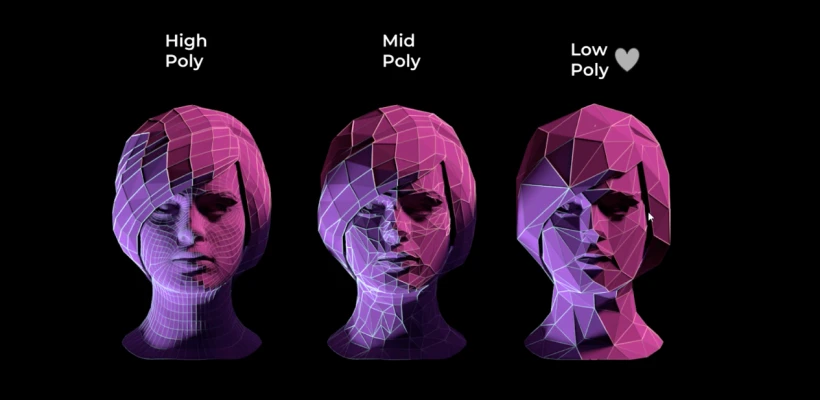
Low poly art is a visual style defined by simplified geometry, minimal polygon counts, and intentional abstraction rather than realistic detail. Instead of hiding its structure, low poly embraces visible facets, clean edges, and readable forms.
Importantly, low poly is a design choice, not a technical limitation. Artists choose this style to emphasize shape, color, and mood over surface detail and texture complexity.
What low poly is not:
- It is not unfinished modeling
- It is not a lack of skill or effort
- It is not an automatic visual style without direction
Successful low poly work relies on strong fundamentals and clear artistic intent.

How Low Poly Design Communicates Visually
Low poly visuals work because every design decision is intentional.
Shape and Readability
Clean silhouettes and simplified forms make objects instantly recognizable. With fewer details competing for attention, the viewer can understand form and structure at a glance.
Composition Over Complexity
Low poly shifts focus away from micro-details and toward overall composition. Balance, rhythm, and spatial relationships become more important than surface realism.
Abstraction and Imagination
By removing literal detail, low poly invites the viewer to mentally complete the image. This engagement often makes environments feel more evocative than hyper-detailed realism.
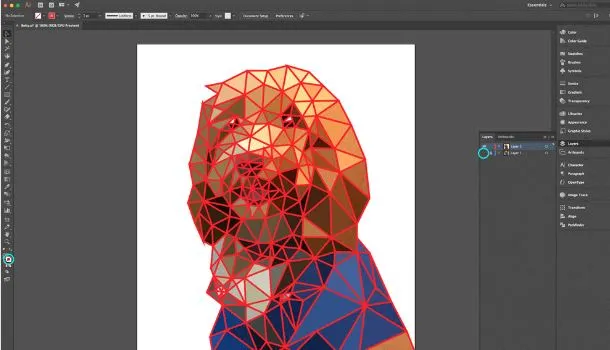
Color, Lighting, and Mood in Low Poly Art
Low poly relies heavily on visual fundamentals rather than textures.
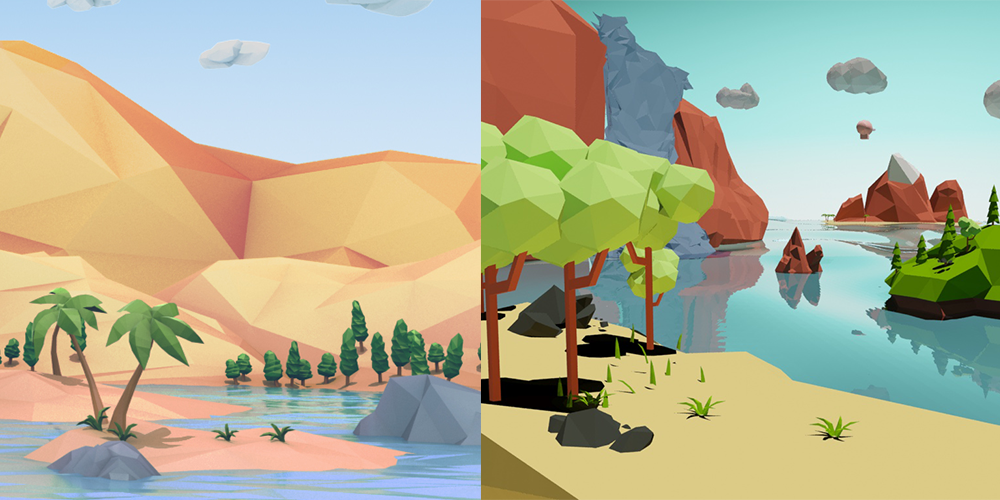
Color palettes are often bold, limited, or harmonized to establish mood quickly. Instead of realistic surface detail, color relationships define atmosphere and emotional tone.
Lighting is typically simple and purposeful. It emphasizes form, depth, and direction without overpowering the geometry. Flat or subtle shading preserves clarity and prevents visual noise.
Mood in low poly is created through color choices and contrast rather than material complexity. This makes the emotional tone easier to control and more consistent across an entire project.

Low Poly in Games and Interactive Media
Low poly is especially effective in interactive environments.
Performance efficiency allows games to run smoothly across a wide range of hardware. Clear shapes maintain readability at different camera distances, which is essential for gameplay clarity.
Stylized visuals also age better than realism. While realistic graphics quickly become outdated, strong low poly art remains visually appealing years later.
From a player perspective, low poly reduces visual fatigue, supports faster decision-making, and keeps focus on interaction rather than visual overload.
Storytelling Through Simplification
In low poly art, storytelling succeeds not despite simplification, but because of it.
Environments become symbolic rather than literal. Shape language communicates tone, scale, and danger more effectively than dense detail. Characters rely on silhouette, motion, and proportion to express personality.
Consistency plays a key role. Repetition of visual rules creates cohesive worlds that feel intentional and believable. Simplicity strengthens narrative focus by removing distractions.
Technical Advantages as Creative Leverage
Technical efficiency is not the goal of low poly. It is the enabler.
Lower hardware requirements allow projects to reach more platforms. Faster production times support iteration, experimentation, and refinement. Artists can test ideas quickly without heavy optimization overhead.
Scalability makes it easier to expand worlds while maintaining visual consistency. For VR, AR, and mobile experiences, low poly often provides the best balance between immersion and performance.
Common Misconceptions About Low Poly Art
One common myth is that low poly equals low effort. In reality, removing detail exposes mistakes in proportion, composition, and color more clearly than detailed models.
Another misconception is that low poly is only suitable for indie or mobile games. Many large-scale projects use low poly intentionally to achieve clarity and strong visual identity.
Low poly does not lack artistic depth. It demands discipline, restraint, and a deep understanding of fundamentals.
Advantages of Low Poly Art
Strong Visual Clarity
Simplified shapes and clean silhouettes allow assets to be read instantly, which is critical for interaction and gameplay.
Performance Efficiency
Lower polygon counts reduce rendering demands, making low poly ideal for performance-sensitive platforms.
Distinct Visual Identity
Stylization and abstraction help projects stand out and remain recognizable without relying on realism.
Disadvantages of Low Poly Art
Limited Realism
Low poly is not suitable for projects that require cinematic fidelity or detailed realism.
Risk of Generic Appearance
Without strong art direction, low poly visuals can feel repetitive or uninspired.
When Low Poly Is the Right Choice
Low poly works best when clarity, performance, and strong identity matter more than realism. It excels in stylized worlds, gameplay-focused experiences, and projects that value longevity and scalability.
When It Isn’t
Projects that rely on realism, intricate surface detail, or cinematic immersion may benefit more from higher-fidelity approaches.
Bottom Line
The artistry of low poly lies in restraint. By removing excess detail, artists are forced to think more deeply about shape, color, and composition. From our experience at Polydin Studio, low poly art delivers its strongest results when simplicity is used deliberately, creating visual identities that feel timeless rather than constrained.
As hardware grows more powerful, low poly remains relevant not because of limitations, but because intentional simplicity continues to outperform visual excess.
FAQs
Is low poly art still relevant in modern games?
Yes, low poly art remains highly relevant in modern games, and not because of hardware limitations. Its relevance comes from what it offers as a design approach rather than a technical shortcut.
Low poly excels at visual clarity. Simplified shapes and strong silhouettes make gameplay easier to read, especially in fast-paced or interaction-heavy experiences. This clarity improves player decision-making and reduces visual fatigue, which is increasingly important as games become more complex.
It also provides a strong and lasting visual identity. While realistic graphics age quickly as technology advances, well-directed low poly art tends to remain visually appealing over time. Many modern games choose stylization precisely because it helps them stand out in a crowded market and avoids chasing ever-changing realism benchmarks.
From a production standpoint, low poly supports efficient iteration and scalability. Teams can experiment more freely, maintain consistent art direction, and target a wider range of platforms without sacrificing performance. This flexibility is particularly valuable for VR, mobile, and cross-platform titles.
In short, low poly art is still relevant because it delivers clarity, identity, and longevity. Its value lies in intentional simplicity, not in technical constraint.
What skills are important for low poly artists?
Strong low poly artists rely on fundamentals. Clear shape and silhouette design, good proportions, and solid composition are essential. Color theory and basic lighting skills matter more than texture detail, and strong artistic restraint is crucial. Knowing what to remove without losing clarity is the core skill behind effective low poly art.
Where is low poly art most commonly used?
Low poly art is most commonly used in video games, especially stylized, indie, mobile, and VR titles where clarity and performance matter. It is also widely used in animation, VR and AR experiences, mobile apps, architectural visualization, and stylized digital environments where strong visual identity and efficiency are priorities.