


Every game you play is the result of coordinated effort rather than a single creative spark. Behind the screen is a game development company managing people, tools, budgets, deadlines, and constant trade-offs to turn an idea into a playable experience. While it is easy to focus on the final product, the structure and decisions of the studio behind it often determine whether a game succeeds, struggles, or never ships at all.
Many players and aspiring developers do not fully understand what game development companies actually do, how their teams are structured, or what separates a small indie studio from a large AAA organization. This lack of clarity also affects founders and businesses looking for development partners, where choosing the wrong type of studio can derail an entire project.
This Post of Polydin Studio explains what game development companies are, the main types of studios in the industry, how they organize production, the roles inside a studio, and a few major AAA companies that have shaped modern game development.
Need Game
Art Services?
Visit our Game Art Service page to see how
we can help bring your ideas to life!
The Main Types of Game Development Studios You Will See
Indie studios
Indie studios are typically small teams or solo developers working with limited budgets and high creative freedom. Roles overlap heavily, decisions are fast, and experimentation is common. This environment encourages originality, but it also comes with financial risk, limited marketing reach, and intense personal workload. Many unique mechanics and unconventional narratives emerge from this space because constraints force careful design choices.
Mid-tier or AA studios
AA studios sit between indie and AAA development. They operate with moderate budgets, clearer pipelines, and more defined roles while still retaining some creative flexibility. These studios often aim for focused scope, strong production discipline, and commercially viable projects without the massive overhead of AAA teams. For many developers, this space offers a balance between creative input and structural stability.
AAA studios
AAA studios are large organizations producing high-budget, high-visibility games. Development cycles are long, teams are highly specialized, and production is driven by milestones and internal approvals. These studios rely on large art departments, advanced and best game engines, strict pipelines, and extensive testing. While this reduces financial risk and increases polish, it also slows iteration and increases coordination overhead.
Outsourcing and support studios
Outsourcing and support studios provide art, animation, VFX, QA, engineering, or co-development services to other teams. They play a critical role in modern game development, especially for large projects that need to scale content late in production or maintain live support after launch. Many major games today are built through collaboration between multiple studios across different regions.
Mobile game studios
Mobile studios focus on short-session gameplay, free-to-play systems, analytics, and frequent updates. Their production cycles are faster, and post-launch support is often more important than the initial release. Success in this space depends heavily on live operations, user retention, and monetization strategies rather than traditional launch-driven sales.
How Game Development Companies Organize Production
Game development companies are not just collections of specialists. Their primary challenge is organizing people and processes so creative work can happen consistently under real-world constraints.
Concept and pre-production
At the company level, pre-production is about decision-making and risk reduction. Leadership, producers, and senior developers define the game’s direction, scope, target audience, and technical limits. Prototypes are built to test feasibility and alignment, not to impress players. Studios that rush this phase often face costly rework later.
Production coordination
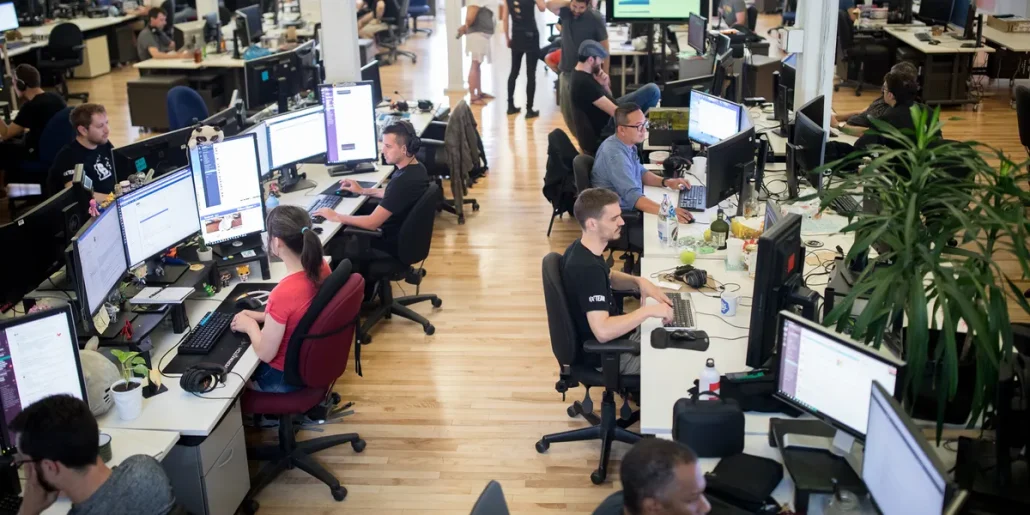
During production, the company’s role shifts toward coordination. Producers manage schedules, dependencies, and priorities across departments. Art, design, and engineering teams work in parallel, which requires clear pipelines, shared tools, and constant communication. Larger studios rely on formal milestone reviews, while smaller teams depend on faster feedback loops and informal alignment.
Quality control and internal testing
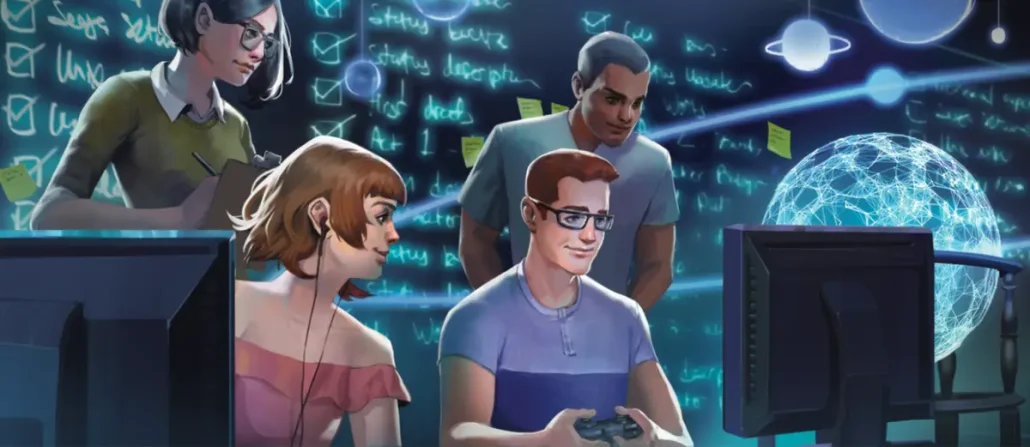
Testing is integrated into production rather than treated as a final step. Game development companies decide when to fix issues, when to cut features, and when to stabilize builds based on broader project goals. These decisions are typically made at the production and leadership level, balancing quality against time and budget.
Marketing alignment and external communication
Studios coordinate closely with marketing and community teams throughout development. What is shown publicly must reflect what the company can realistically deliver. Misalignment between development and marketing can damage trust, even if the game itself is strong.
Launch planning and post-release structure
As launch approaches, companies reorganize teams to handle certification, patches, and post-release updates. Some developers transition to live support, while others move into pre-production for future projects. How smoothly this transition happens often reflects a studio’s maturity and long-term planning.
Across all stages, the defining role of a game development company is not just making content, but creating a structure where creative work can scale without collapsing under its own weight.
Who Does What in a Game Studio
Game development companies rely on clearly defined roles to manage complexity and reduce friction between teams.
- Game designers define mechanics, systems, and the intended player experience.
- Programmers implement gameplay systems, tools, and technical foundations.
- Artists create characters, environments, animations, user interfaces, and visual effects.
- Writers and narrative designers shape story, dialogue, world-building, and tone.
- Audio designers handle sound effects, music, voice integration, and audio balance.
- Producers and project managers manage schedules, scope, priorities, and communication across teams.
- QA testers identify bugs, edge cases, and usability issues while helping maintain overall quality.
- Marketing and community leads communicate with players and manage the game’s public presence.
- Business and publishing teams handle funding, partnerships, platform relationships, and distribution.
A finished game exists because these roles operate in coordination rather than isolation.
Read Also
5 Major AAA Game Development Companies
Ubisoft
Known for franchises such as Assassin’s Creed, Far Cry, Watch Dogs, and Rainbow Six, Ubisoft operates a global studio network focused on large-scale production and shared technology.
Electronic Arts
Associated with Battlefield, FIFA, Apex Legends, Dragon Age, and Mass Effect, EA combines sports, multiplayer, and narrative-driven development with long-term live support.
Activision Blizzard
Best known for Call of Duty, Overwatch, Diablo, and World of Warcraft, the company has shaped online infrastructure and long-running franchise management.
Rockstar Games
Rockstar is recognized for Grand Theft Auto, Red Dead Redemption, and LA Noire, with a reputation for extended development cycles and high production polish.
Read Also
Naughty Dog
Creators of The Last of Us and Uncharted, Naughty Dog is often cited for its cinematic presentation, narrative focus, and technical craftsmanship.
Bottom Line
Working across studios of different sizes makes one thing clear: there is no single formula for building successful games. Every title is the product of coordination, planning, compromise, and creative problem-solving under pressure. Game development companies are the structures that make this possible, turning ideas into playable worlds through organization as much as creativity.
Understanding how these companies function helps you better appreciate the craft behind games and gives you clearer ground to build, join, or collaborate within the industry.
FAQs
What is the difference between an indie studio and a AAA studio?
The main difference lies in scale, structure, and risk management, not talent or creativity.
An indie studio is usually a small team or even a solo developer working with limited budgets and a high degree of creative freedom. Roles often overlap, decisions are made quickly, and experimentation is encouraged because financial expectations are lower. The downside is higher personal risk, fewer resources, and limited marketing reach. Indie studios succeed by being focused, original, and efficient rather than large.
A AAA studio, on the other hand, is a large organization with hundreds or even thousands of developers involved. These studios work with high budgets, long development cycles, and clearly defined roles across specialized departments. Decision-making is slower and more structured because projects involve significant financial risk, multiple stakeholders, and strict production pipelines. In exchange, AAA studios can deliver massive scope, technical polish, and global marketing support.
Neither approach is inherently better. Indie studios trade scale for flexibility, while AAA studios trade speed and freedom for stability, reach, and production power. The difference is not about passion or skill, but about how each type of company manages risk, resources, and creative control.
Which roles are hardest to hire for in game development companies?
The hardest roles to hire for are usually the ones that sit at the intersection of experience, specialization, and production impact. These positions require people who can work within real studio constraints, not just technical skill.
Senior gameplay programmers are consistently in high demand. Studios look for developers who understand engine architecture, performance limits, and gameplay systems while also collaborating closely with design. Many programmers have technical skill, but far fewer have shipped games and can work safely within large codebases.
Technical artists are another major bottleneck. They bridge art and engineering, building shaders, tools, and optimized pipelines. This hybrid skill set is rare, and projects often stall when studios lack someone who can translate creative goals into technical solutions.
Experienced producers are surprisingly difficult to hire. Good producers do more than track tasks. They manage scope, resolve conflicts between departments, anticipate risks, and keep teams aligned under pressure. Studios often feel the absence of strong production leadership more than any single technical role.
Senior animators, especially those with gameplay and systems experience, are also hard to find. Studios value animators who understand state machines, blending, and responsiveness, not just visual quality.
Finally, reliable QA leads can be difficult to recruit. While entry-level QA is common, experienced QA professionals who can design testing strategies, communicate clearly with developers, and influence production decisions are rare and often underestimated.
In most cases, studios struggle less with hiring talent and more with hiring people who have shipped games, worked in teams, and understand production realities. Those experiences are what truly separate hard-to-fill roles from the rest.