

In the dynamic realm of 3D computer graphics, the art of hard surface modeling stands as a pillar of creativity and precision. This technique allows digital artists to craft intricate and precise 3D models of non-organic objects, ranging from vehicles and machinery to architectural structures and gadgets. In this article by Polydin game art outsourcing studio, we will explore the world of 3D hard surface modeling, delving into its definition, showcasing compelling examples, discussing fundamental techniques, and highlighting the common tools employed by artists in this field. Furthermore, we’ll draw a clear distinction between hard surface modeling and organic modeling to understand their unique attributes better. Whether you’re a seasoned 3D artist or just venturing into the world of 3D modeling, this guide will provide valuable insights and knowledge to enhance your skills in hard surface modeling.
What Is 3D Hard Surface Modeling?
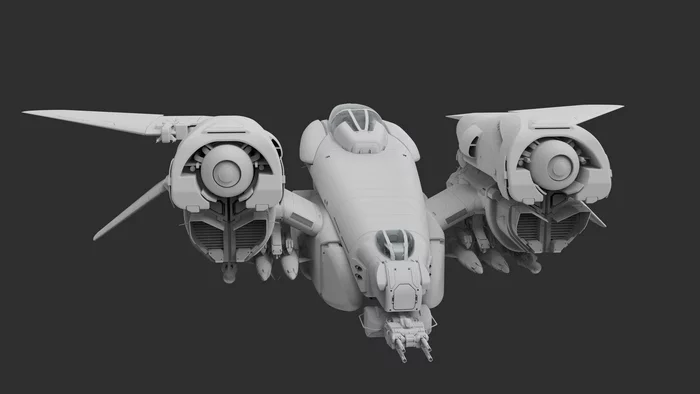
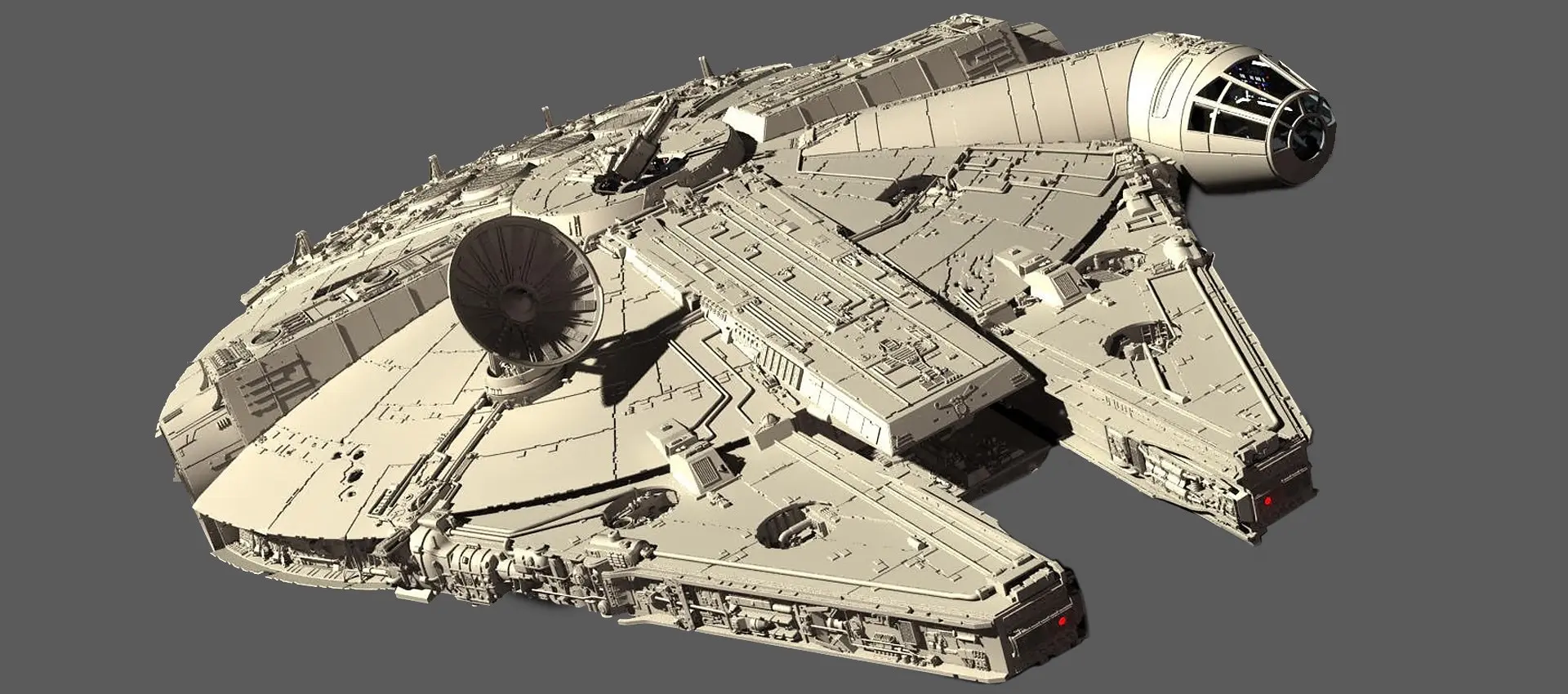
3D hard surface modeling is a specialized discipline within the broader field of 3D computer graphics. It involves the creation of three-dimensional digital representations of non-organic objects or surfaces, such as machines, vehicles, architectural structures, electronic devices, and various inanimate objects. This modeling technique is characterized by its emphasis on precision, geometric shapes, and the use of mathematical and technical principles to recreate the physical properties of these objects in a virtual environment.
One of the defining features of hard surface modeling is its attention to detail. Artists who specialize in this field strive to replicate every facet of an object with exceptional accuracy. This includes recreating intricate surface textures, fine details, and mechanical components to make the 3D model look as realistic as possible. Achieving this level of realism often requires a deep understanding of the object being modeled and meticulous attention to geometry.
3D Hard Surface Modeling Examples
Examples of 3D hard surface modeling can be found in various industries and applications, showcasing the versatility and significance of this technique:
- Automotive Design: 3D hard surface modeling plays a crucial role in the automotive industry. Car manufacturers use it to design and visualize vehicle prototypes. These models accurately represent the car’s exterior, including its body, chassis, wheels, and intricate details. This enables designers and engineers to make informed decisions about aerodynamics, aesthetics, and functionality.
- Architectural Visualization: Architects and designers rely on hard surface modeling to create 3D representations of buildings and interior spaces. These models allow clients to visualize architectural concepts and make design decisions. Details like windows, doors, staircases, and furniture are meticulously modeled to provide a realistic view of the future structure.
- Product Design: In product design, 3D hard surface modeling is essential for creating prototypes and visualizing product concepts. Whether it’s consumer electronics, household appliances, or industrial equipment, accurate 3D models help designers refine their ideas, test functionality, and present their designs to stakeholders.
- Video Games: Hard surface modeling is integral to the creation of assets in video game development. Game artists model weapons, vehicles, buildings, and props with intricate details to enhance the immersive experience for players. These models are optimized for real-time rendering, balancing visual fidelity with performance.
- Film and Animation: The entertainment industry relies on hard surface modeling to create props, vehicles, and environments for movies, television shows, and animated features. Whether it’s a sci-fi spacecraft or a historical building, these models contribute to the visual storytelling process.
- Industrial Design: Industrial designers use 3D hard surface modeling to create prototypes of machinery and equipment. These models are critical for testing functionality, ergonomics, and manufacturing feasibility.
In each of these examples, 3D hard surface modeling showcases its versatility in accurately representing non-organic objects. It enables professionals to visualize, design, and simulate objects and structures with precision, contributing to advancements in various fields and industries.
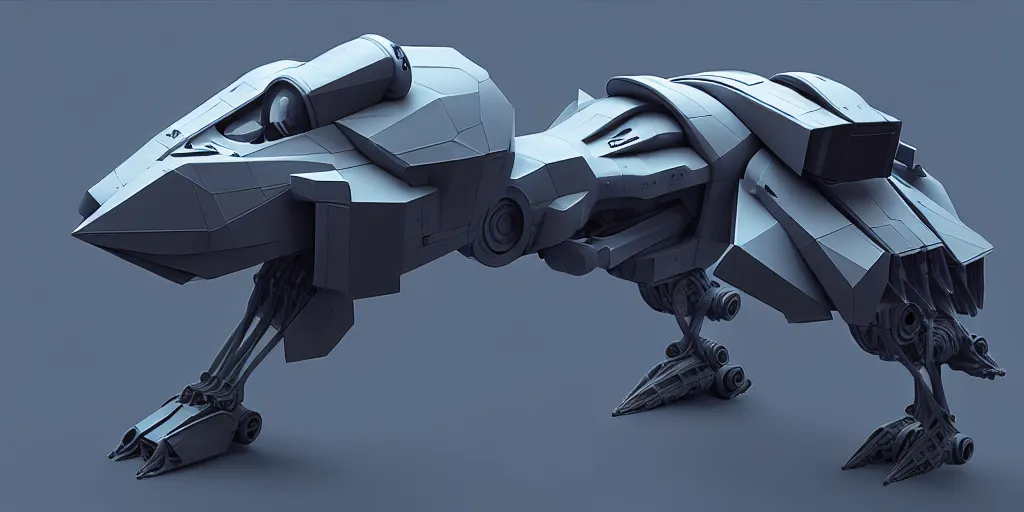
What Are the Main Techniques in Hard Surface Modeling?
Here are the main techniques you can use in your own hard surface modeling projects.
Box Modeling
Box modeling is one of the most common approaches in hard surface modeling. Artists begin with a simple cube or rectangular shape and gradually refine it by extruding, scaling, and adding detail. This method is intuitive and flexible, making it useful for blocking out mechanical parts, vehicles, and architectural elements before adding finer details.
NURBS Modeling
NURBS (Non-Uniform Rational B-Splines) modeling uses mathematically defined curves to create smooth, precise surfaces. It is widely used in industrial design and automotive visualization where accuracy is critical. For hard surface assets that require perfectly curved shapes—such as car bodies, aircraft, or product designs—NURBS ensures clean surfaces without the artifacts sometimes seen in polygon-based modeling.
Polygonal Modeling
Polygonal modeling is the industry standard for game assets, as it provides a high degree of control over topology and performance optimization. Artists construct objects using vertices, edges, and faces, which can be subdivided and manipulated to achieve complex shapes. This technique allows for efficient detail management, ensuring models can be optimized for real-time rendering in engines like Unreal or Unity.
Kitbashing
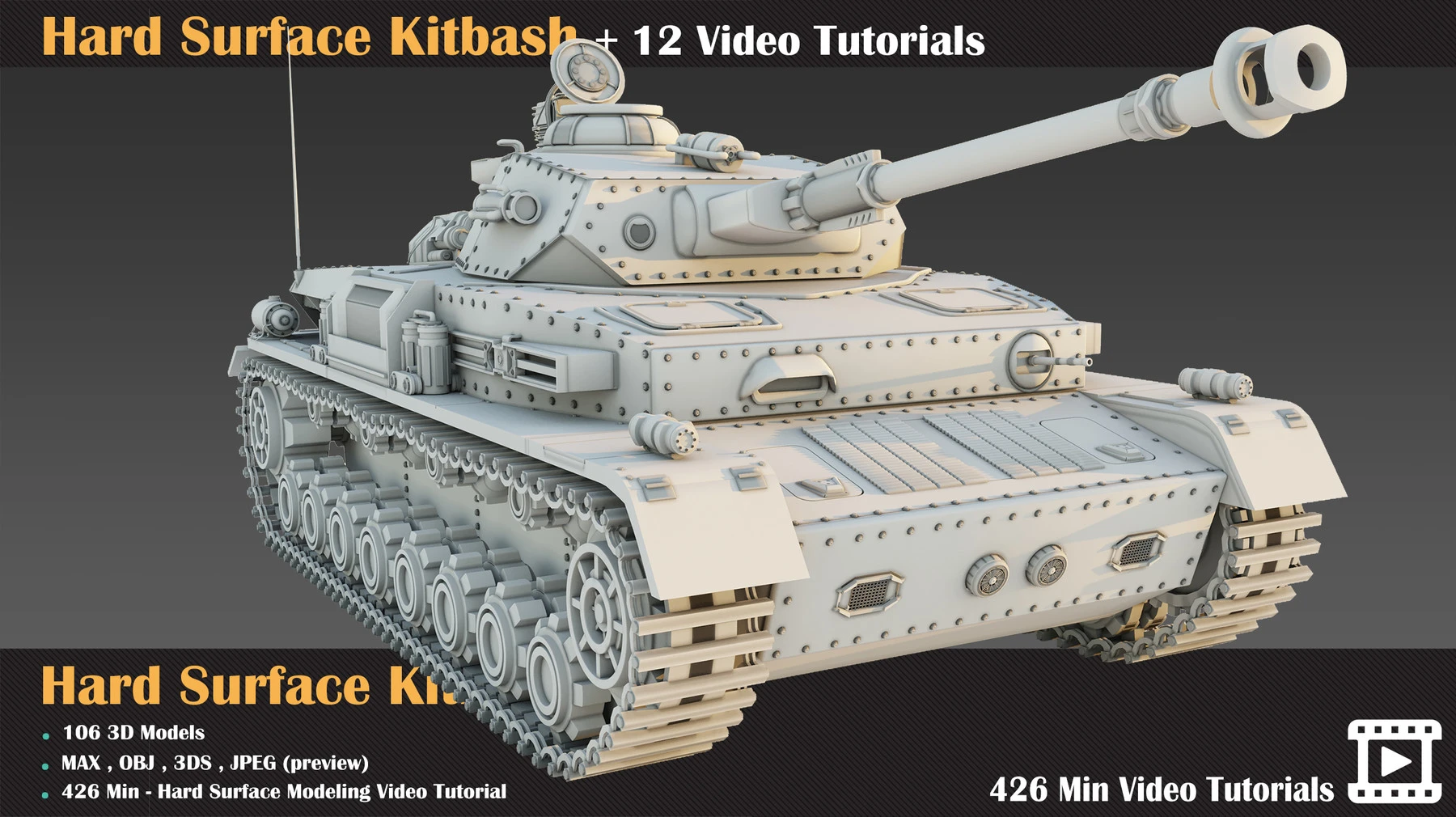
Kitbashing involves reusing pre-made model parts or “kits” to quickly assemble complex designs. This method accelerates production, especially for futuristic or mechanical assets, by allowing artists to combine modular components into unique creations. It’s a popular choice in concept art and 3D modeling for environments, weapons, and sci-fi props where speed and creativity are essential.
Subdivision Modeling
Subdivision modeling smooths polygonal surfaces by dividing them into smaller faces, creating high-resolution meshes. Artists often start with a low-poly model, then apply subdivision modifiers to achieve refined curves and surfaces. This technique is crucial for creating detailed hard surface models with organic curvature while maintaining control over the base mesh.
Trim Sheets
Trim sheets are textures applied to models to add surface detail without increasing geometry complexity. Artists design reusable sheets with patterns like panels, rivets, or grooves, then map them onto multiple assets. This technique saves time and performance costs while ensuring consistency across large projects, such as environments or mechanical structures.
Edge Loops
Edge loops are essential in defining the flow of a model’s geometry. They help maintain clean topology, prevent shading artifacts, and guide subdivision for smoother results. In hard surface modeling, strategic edge loop placement sharpens edges, supports animations, and ensures models deform or render correctly.
These techniques form the backbone of 3D hard surface modeling, applied across various industries, including automotive design, architecture, product development, gaming, and more. Their precision and geometric accuracy are instrumental in creating realistic and visually captivating 3D models of non-organic objects.

Common Tools for Hard Surface Modeling
Common tools for hard surface modeling are essential for 3D artists and modelers to create precise and detailed representations of non-organic objects. These tools provide a range of features and functionalities tailored to the specific requirements of hard surface modeling. Here are some of the most commonly used tools in the industry:
- Autodesk Maya: Maya is a versatile 3D modeling and animation software known for its comprehensive set of tools. It is favored by artists in the entertainment industry for its ability to handle complex hard surface modeling projects.
- Autodesk 3ds Max: 3ds Max is another popular Autodesk product that excels in modeling, particularly in architectural and product visualization. It offers a robust set of modeling tools and a user-friendly interface.
- Blender: Blender, an open-source 3D software, is recognized for its flexibility and extensive modeling toolset. It caters to both professionals and hobbyists and is known for its active community and continuous development.
- Cinema 4D: Cinema 4D is a preferred choice for motion graphics and visual effects artists. It provides intuitive modeling tools and seamless integration with other industry-standard software.
- ZBrush: While primarily known for digital sculpting, ZBrush is also used for hard surface modeling, especially for intricate mechanical parts and high-detail modeling.
- Substance Painter: Substance Painter is a powerful texture painting software that allows artists to create realistic textures for 3D models. It is often used in conjunction with modeling software to apply materials and details.
- Rhino: Rhino is recognized for its precision and accuracy in 3D modeling. It is widely used in industrial design and architecture, where precision is paramount.
- Fusion 360: Fusion 360, an Autodesk product, is designed for product design and engineering. It offers parametric modeling tools and is well-suited for creating Game Mechanics and engineering-related objects.
- Modo: Modo is a versatile 3D modeling, sculpting, and texturing software known for its user-friendly interface and flexibility.
- Hard Ops and Boxcutter (Blender Add-ons): These Blender add-ons are tailored specifically for hard surface modeling, enhancing Blender’s modeling capabilities with advanced tools and workflows.
What is the difference between hard surface modeling and sculpting?
Hard surface modeling and sculpting are two distinct approaches to creating 3D models, each suited for different purposes:
- Hard Surface Modeling:
- Definition: Hard surface modeling involves creating 3D models using precise geometric shapes, typically employing techniques like edge loops, extrusions, and boolean operations.
- Purpose: It is commonly used for creating objects with well-defined edges, such as vehicles, machinery, buildings, and props.
- Workflow: Artists usually start with simple geometric primitives (e.g., cubes, cylinders) and gradually refine them to achieve the desired shape. The process often involves precise measurements and attention to detail.
- Sculpting:
- Definition: Sculpting involves manipulating a digital mesh using brushes to sculpt organic shapes and intricate details, similar to traditional sculpting with clay.
- Purpose: It is primarily used for creating organic and irregular shapes, such as characters, creatures, and natural elements like rocks and trees.
- Workflow: Artists start with a basic mesh or primitive and use sculpting brushes to add or remove geometry, sculpting details like wrinkles, muscles, and textures. Sculpting tools simulate real-world sculpting techniques, allowing for intuitive and organic modeling.
In summary, hard surface modeling is ideal for creating objects with precise geometric shapes and well-defined edges, while sculpting is better suited for creating organic and irregular forms with intricate details. The choice between the two depends on the nature of the object being created and the desired outcome.
What is the hard surface modeling process?
Hard surface modeling is a 3D technique extensively used in product design, engineering, architecture, and entertainment. The process involves key steps:
- Reference Gathering: Collecting reference material, like blueprints or photos, for accuracy.
- Blocking Out: Creating the basic shape as a foundation.
- Topology Planning: Ensuring proper mesh arrangement for deformations.
- Detailing: Adding intricate features like panel lines and rivets.
- Materials and Shading: Applying materials and shaders for realistic looks.
- Texturing: Enhancing visual appeal with textures.
- UV Unwrapping: Flattening the 3D model for precise texturing.
- Test Rendering: Frequent evaluations for accuracy.
- Fine-Tuning: Optimizing for real-time use.
Common Applications of Hard Surface Modeling
Hard surface modeling refers to the creation of man-made objects with defined edges and mechanical structure; things like vehicles, weapons, architecture, robots, and machinery. It plays a central role across many industries and is one of the most technically demanding areas of 3D modeling due to its precision requirements.
3D Modeling Services
Studios offering 3D modeling services often specialize in hard surface work, especially for game assets, film props, and marketing visuals. Precision, speed, and clean topology are key selling points in this field.
3D Animation
Hard surface models are often animated, especially in cases like vehicles, robots, or interactive props. These models must be rigged and designed to support movement while retaining structural integrity.
3D Modeling Software
Popular tools for hard surface modeling include Blender, Autodesk Maya, 3ds Max, and ZBrush (for hybrid workflows). CAD software like Fusion 360 or SolidWorks is also used in industrial applications for high-precision needs.
Hard surface modeling is where function meets form, blending engineering with artistry to bring mechanical objects to life in any digital space.
How many types of surfaces are in surface Modelling?
Surface modeling encompasses several types of surfaces, each with distinct characteristics and use cases:
- NURBS Surfaces (Non-Uniform Rational B-Spline): NURBS surfaces are mathematically defined surfaces that offer excellent precision and smoothness. They are commonly used in applications where highly accurate and smooth curves are essential, such as automotive and industrial design.
- Polygonal Surfaces: Polygonal surfaces are composed of interconnected flat polygons (usually triangles or quads). They are widely used in real-time graphics, video games, and 3D modeling for their efficiency and ability to represent complex geometry.
- Bezier Surfaces: Bezier surfaces are defined by control points that influence the shape of the surface. They are used in modeling software for their versatility in creating complex shapes, especially in the aerospace and automotive industries.
- Subdivision Surfaces: Subdivision surfaces start as a simple, low-polygon mesh and are subdivided repeatedly to create a smooth and detailed surface. They are used in character modeling and organic shapes to achieve both detail and smoothness.
- Parametric Surfaces: Parametric surfaces are defined by mathematical equations and can represent a wide range of shapes. They are commonly used in computer graphics for their flexibility and ability to describe complex forms.
The choice of surface type depends on the specific modeling task, precision requirements, and the intended use of the 3D model.
Conclusion
In conclusion, 3D hard surface modeling is a specialized discipline that allows artists to craft intricate and precise representations of non-organic objects, while organic modeling focuses on the creation of lifelike, natural forms found in living organisms and the environment. Both fields demand unique techniques, tools, and skills tailored to their respective subject matters. Whether it’s designing futuristic machines or bringing organic characters to life, the distinctions between these modeling approaches offer creative professionals the versatility to tackle a wide range of projects across industries, enabling the visualization of diverse concepts with precision and realism.